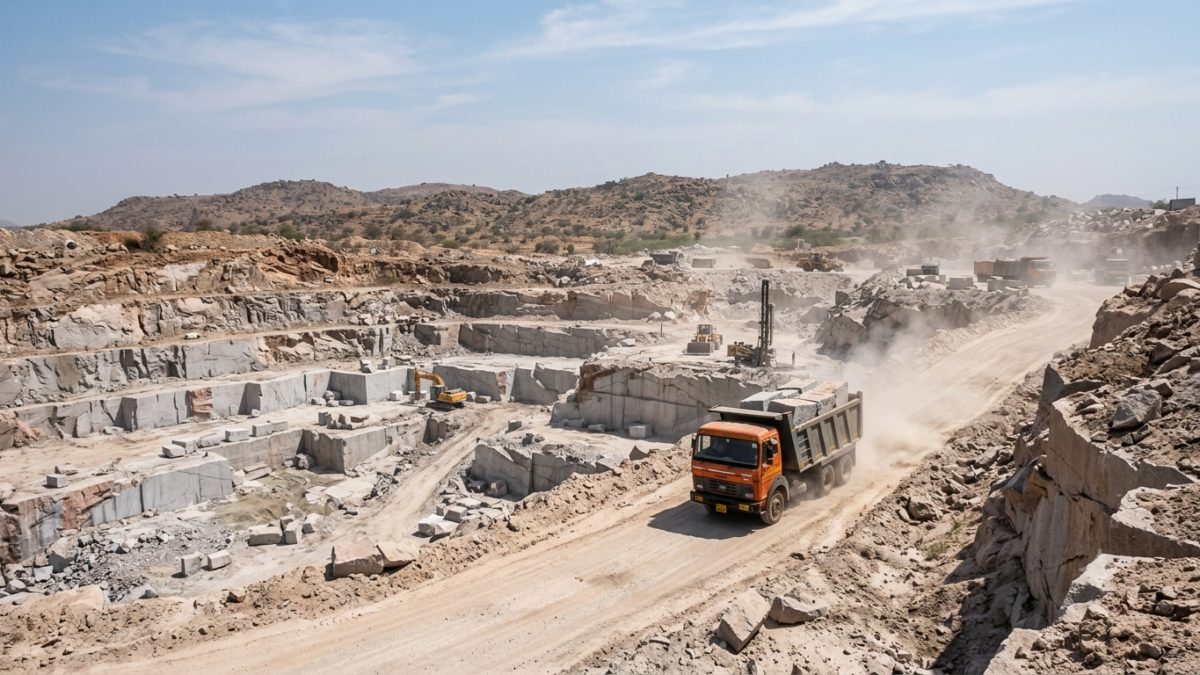
Granite quarrying dust pollution around Tirupati has pushed residents to demand tighter controls. Families near the city’s stone-cutting belt worry about the grey haze. It settles on homes, water tanks and lungs, and it will not clear on its own. In May 2026, local reports described families near quarry sites complaining of breathing trouble, watery eyes and dust-coated rooftops.
This guide explains what that dust actually is and why it harms health. It also covers what the law requires, and exactly how a resident can complain through the right official channel.
Tirupati Official is an independent city news guide. It is not a government body, not the pollution board, and not affiliated with any temple trust or municipal authority. We do not accept complaints, applications or payments. Every action below routes to the official portal.
Quick facts on granite quarrying dust pollution
- Quarry dust is not ordinary dust. It carries fine silica particles that lodge deep in the lungs.
- Long exposure can cause silicosis, an incurable lung disease, so the risk is treated as serious by doctors and regulators alike.
- The Andhra Pradesh Pollution Control Board (APPCB) regulates quarry dust under the Air Act, while the mines department controls the quarry lease itself.
- Residents can complain online through the APPCB grievance system without paying any fee.
- Water spraying, covered trucks and wheel-washing are the standard dust-control steps a compliant quarry must run.
What is happening near Tirupati
Granite quarrying has long fed Tirupati’s construction and export trade, so the industry supports thousands of local jobs. The trouble starts when cutting, blasting and truck movement throw up more dust than the surrounding neighbourhoods can absorb. Residents living close to active pits say the load has grown heavier, and that is what triggered the recent round of complaints.
The pattern is familiar across South India. When quarries sit near homes, dust travels far on dry, windy days, since fine particles stay airborne for hours. Similar disputes in Karnataka, Tamil Nadu and Kerala have reached pollution boards and the National Green Tribunal. So the Tirupati concerns fit a wider trend, rather than a one-off event.
Why granite quarrying creates so much dust
Granite is a hard rock, and breaking it releases a storm of fine particles. Drilling and blasting shatter the stone, while cutting and polishing grind it further. Every one of these steps produces respirable dust, meaning particles small enough to slip past the nose and reach the lungs.
Movement makes it worse. Loaded tipper trucks kick up clouds from unpaved haul roads, and uncovered loads shed dust along public streets. Because the particles are so light, a single quarry can affect an area far larger than its lease boundary. Environmental studies in India have tracked quarry dust drifting several kilometres downwind.
What granite quarrying dust pollution does to your health
Granite quarrying dust pollution matters most because of one word: silica. Granite is rich in crystalline silica. When the rock is cut or crushed, it releases respirable crystalline silica, and that fine fraction does the real damage. Breathing it over months and years can scar the lungs permanently.
The most serious outcome is silicosis. This is an irreversible hardening of lung tissue, and there is no cure once it sets in. Silicosis also raises the risk of tuberculosis, chronic bronchitis and reduced lung function. Shorter-term exposure brings coughing, breathlessness, throat irritation, watery eyes and worsening asthma, especially when dust levels spike.
Silicosis is preventable but not curable. Once lung scarring begins, it cannot be reversed, which is why dust control at the source matters far more than treatment later.
Who faces the highest risk
Quarry and crusher workers carry the heaviest exposure, because they stand in the dust every working day. Yet nearby residents are far from safe. Children, older adults, pregnant women and anyone with asthma or heart disease react to polluted air faster and harder than a healthy adult.
Households right beside haul roads face a second problem. Dust coats drinking-water tanks, kitchen surfaces and drying clothes, so exposure continues indoors long after the trucks pass. If your area sits within a kilometre or two of active quarrying, treat the risk as real and act early.
What India’s air-quality rules actually say
India sets legal limits on airborne dust through the Central Pollution Control Board (CPCB). Under the National Ambient Air Quality Standards, coarse dust called PM10 has a legal limit. It must stay at or below 100 micrograms per cubic metre over 24 hours. Finer PM2.5 particles must stay at or below 60 over the same period.
Quarries also operate under conditions set by the pollution board. When dust readings near homes cross these limits, the operation is breaching its consent, so residents have a clear legal footing to complain. The standards give an ordinary citizen a number to point to, rather than a vague grievance.
How granite quarrying dust pollution is regulated in Andhra Pradesh
Two authorities share the job. The Andhra Pradesh Pollution Control Board handles air and dust under the Air Act. This is the Air (Prevention and Control of Pollution) Act, 1981. Meanwhile, the Department of Mines and Geology controls the quarry lease and mining plan.
A quarry needs clearance from both authorities before it can legally run. Before any pit opens, the operator must obtain the board’s Consent for Operation, and that consent carries dust-control conditions. If a quarry ignores them, the board can inspect, issue directions, impose penalties, or order a shutdown. Enforcement has often been patchy across India, so sustained resident pressure usually decides whether rules are actually applied.
Dust-control steps a compliant quarry must run
Regulators expect specific, verifiable measures at every site. These are not optional extras, since each one targets a known dust source. The table below shows the standard controls and what each achieves.
| Dust-control measure | What it prevents |
|---|---|
| Water spraying on roads and stockpiles | Airborne dust from dry surfaces and cutting |
| Covered tipper trucks | Dust shedding along public roads |
| Wheel-washing at exits | Mud and dust dragged onto streets |
| Green belt around the lease | Dust drifting into homes |
| Continuous air monitoring | Undetected spikes above legal limits |
When you report a quarry, it helps to note which of these steps are missing. A site with no water spraying and uncovered trucks is an easy case for inspectors to act on.
How to report granite quarrying dust pollution in Tirupati
You do not need a lawyer or a middleman to complain. Granite quarrying dust pollution complaints go directly to official bodies, and every genuine channel is free. Never pay a private “agent” who offers to file for you, because the real portals cost nothing.
Start with the pollution board, since dust is its direct responsibility. File a grievance on the Andhra Pradesh Pollution Control Board portal through its online grievance system. For civic issues inside city limits, use the Tirupati Municipal Corporation grievance section. If local action stalls, the National Green Tribunal accepts environmental complaints through its public grievance portal.
What to include in your complaint
A strong complaint is specific. Give the quarry’s location or survey number if you know it. Add the dates and times dust is worst, plus any photos or short videos of visible dust.
Mention health effects in the household, and note missing controls such as dry roads or uncovered trucks. The more concrete detail you provide, the faster an inspector can verify the problem.
How residents can protect their household
While regulators act, take practical steps at home. Keep windows shut on dry, windy afternoons, because that is when dust peaks. Cover drinking-water tanks tightly, and rinse rooftop tanks and outdoor surfaces often so dust does not build up.
A good mask helps outdoors. An N95 respirator filters fine dust, whereas a cloth or surgical mask does little against silica. If anyone at home develops a lingering cough or breathlessness, see a doctor early and mention the dust exposure, since that history helps with diagnosis. These steps reduce exposure, though they cannot replace proper control at the quarry itself.
Granite quarrying dust pollution and Tirupati’s growth
Tirupati is expanding fast, and that growth keeps pushing homes closer to the quarry belt. As new colonies spread outward, the buffer between residential streets and active pits shrinks. You can see the same strain in the city’s wider population growth and infrastructure pressure, where rapid urban expansion stretches land, water and air alike.
This is why granite quarrying dust pollution is likely to stay in the local news. More people now live within dust range than a decade ago, so complaints will rise unless controls tighten. Cleaner air also protects the region’s fragile ecology, a theme that runs through Tirupati’s broader environmental monitoring in the surrounding forests. Better dust control is part of keeping a growing city liveable.
What happens next
Local authorities are expected to review quarrying practices as granite quarrying dust pollution complaints mount. A balanced outcome usually means keeping the industry running while enforcing dust controls, monitoring air quality, and setting buffer distances from homes. Residents, quarry operators and officials all have a seat at that table.
Change tends to follow documented, repeated complaints rather than a single letter, so persistence matters. If air readings and health reports keep flowing to the board over time, enforcement becomes far harder to ignore. That is the realistic path to cleaner, safer air near Tirupati’s quarry belt.
The bottom line
Granite quarrying dust pollution is a genuine health issue near Tirupati, not just a nuisance. The silica in the dust can scar lungs for life.
The law already sets clear limits and demands dust controls, so the real gap is enforcement, not rules. Residents hold real power here: document the problem, file free complaints on the official APPCB and municipal portals, and protect the household in the meantime. Steady pressure through the right channels is what turns concern into cleaner air.
Frequently asked questions
Is granite quarrying dust pollution dangerous to health?
Yes. The dust carries crystalline silica, which can cause silicosis, an incurable lung disease, after long exposure. It also triggers coughing, breathlessness and worsening asthma in the short term. Children, older adults and people with lung or heart conditions face the highest risk.
How do I complain about a quarry near my home in Tirupati?
File a free grievance with the Andhra Pradesh Pollution Control Board through its online portal, since dust is its direct responsibility. You can also use the Tirupati Municipal Corporation grievance section for civic issues. Include the quarry location, the worst dust times and any photos.
Which authority controls granite quarries in Andhra Pradesh?
Two bodies share it. The pollution board regulates air and dust under the Air Act, while the Department of Mines and Geology controls the quarry lease and mining plan. A quarry needs clearance from both to operate legally.
What dust levels are legally allowed?
India’s National Ambient Air Quality Standards cap PM10 dust at 100 micrograms per cubic metre over 24 hours. They cap finer PM2.5 at 60 over the same period. When readings near homes cross these limits, the quarry is breaching its pollution consent.
What dust controls must a quarry use?
Compliant sites use water spraying on roads and stockpiles, covered trucks, wheel-washing at exits, a green belt around the lease and air monitoring. If a quarry skips these steps, it is an easy target for a pollution complaint. Note any missing controls in your report.
Can I stop a quarry from operating?
Not directly, but you can trigger enforcement. If a quarry repeatedly breaches dust limits, the pollution board can penalise it or order a shutdown. Sustained, documented complaints to the board and, if needed, the National Green Tribunal are the effective route.
Does a mask protect me from quarry dust?
An N95 respirator filters fine silica dust and helps outdoors. A cloth or surgical mask does little against these tiny particles. Masks reduce exposure, yet the real fix is dust control at the quarry, so keep reporting the problem alongside personal protection.