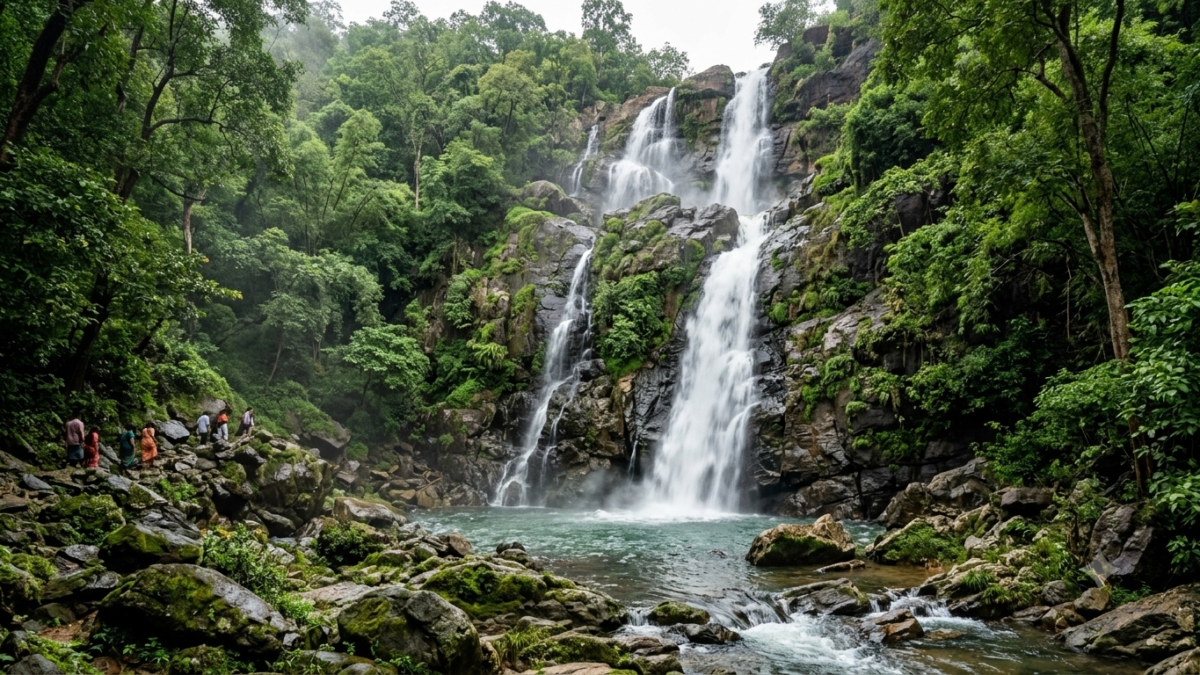
The waterfalls near Tirupati Temple turn an ordinary pilgrimage into a two-in-one trip. Within an hour or two of the Tirumala hill, you can swap the darshan queue for forest trails and falling water. Most visitors come only for Lord Venkateswara, yet the hills nearby hold real surprises. The Seshachalam and Nagari ranges hide some of the prettiest cascades in southern Andhra Pradesh. This guide covers five of the best-known falls. You get verified distances, seasons, and honest safety advice, because many listicles skip it. 
Waterfalls Near Tirupati Temple: Quick Facts
Here is the short version for planning on the move. The waterfalls near Tirupati Temple range from a three-kilometre city hop to an eighty-kilometre drive. Most flow strongest from October to January, right after the monsoon. Only Kailasakona and Kapila Theertham hold water for much of the year, while the rest fade in summer.
- Closest: Kapila Theertham, roughly 3 to 5 km from the city centre.
- Tallest: Talakona, about 270 feet, since it is the highest waterfall in Andhra Pradesh.
- Easiest for families: Kailasakona, where vehicles reach almost to the base.
- Toughest trek: Tada (Ubbalamadugu), a 10 km round-trip through forest and boulders.
- Handle with care: Nagalapuram, where the upper pools are restricted after fatal accidents.
| Waterfall | Distance from Tirupati | Best time | Good for |
|---|---|---|---|
| Kapila Theertham | 3 to 5 km | Aug to Dec | Devotees, short visit |
| Kailasakona | ~45 km | Oct to Feb | Families, easy access |
| Talakona | ~60 km | Oct to Jan | Nature, picnics, light trek |
| Nagalapuram | ~65 km | Oct to Feb | Experienced trekkers only |
| Tada (Ubbalamadugu) | ~80 km | Oct to Jan | Fit trekkers, adventure |
Talakona Falls: Andhra Pradesh’s Tallest Cascade
Talakona is the headline act among the waterfalls near Tirupati Temple. It drops around 270 feet, or 82 metres, so it ranks as the tallest waterfall in Andhra Pradesh. It sits deep inside Sri Venkateswara National Park, near Nerabailu village. The spot is about 60 km from the city, so allow a 1.5 to 2 hour drive. Because the falls lie inside a protected park, you pass a forest check post. You then buy an eco-tourism entry ticket on arrival. A small Siddheswara Swamy Shiva temple stands nearby, so many visitors combine the two. The base pool looks inviting, yet the currents run stronger than they appear. The best months are October to January, when post-monsoon flow is strong and the forest turns lush green. The Andhra Pradesh Forest Department runs eco-tourism cottages here, though rooms are limited. So check the official AP Tourism and Forest Department portals before you rely on one. Carry water and sturdy shoes, since the path stays slippery after rain.
Kailasakona Falls: The Easy Perennial Cascade
If you want a waterfall without a hard trek, Kailasakona is the pick. This perennial cascade in the Nagari hills flows all year. Most falls around Tirupati dry up by summer, while this one keeps going. It lies about 45 km away in Narayanavanam mandal, so expect roughly an hour’s drive. Vehicles can reach almost to the foot of the falls. A short, well-laid path then leads to the main drop of about 30 metres. So even families with older parents manage it comfortably. A small Shiva and Parvati temple sits beside the falls. Local legend says Lord Kailasanatheswara came here after the celestial wedding at nearby Narayanavanam. The mineral-rich water is believed to heal, though that belief is tradition rather than proven medicine. There is usually no entry fee, while parking is paid. APSRTC buses from Tirupati and Puttur also pass close by. October to February brings pleasant weather and reliable flow. Still, avoid the hours right after heavy rain, when the rocks turn treacherous.
Kapila Theertham: The Sacred Waterfall Inside the City
Not every waterfall near Tirupati Temple demands a road trip. Kapila Theertham sits just 3 to 5 km from the city, at the foot of the Tirumala hills. Here a seasonal stream tumbles down the Seshachalam range, so it feeds straight into the Kapileswara Swamy temple tank. Since this is the only Shiva temple under TTD administration, it draws steady footfall. The waterfall is at its best from July to December, when monsoon rain swells the flow. By late winter and summer, though, it can shrink to a trickle. So time your visit if the falls are the main draw. Darshan is free, while paid sevas can be booked at the counter. During heavy flow, temple staff sometimes restrict access to the tank, so follow the day’s instructions on site. If you enjoy this pocket of the city, two spots make natural add-ons. Try the nearby Malwadi Gundam waterfall and the sacred Akasaganga Teertham on Tirumala.
Tada Falls (Ubbalamadugu): The Serious Trek
Tada Falls, known locally as Ubbalamadugu, is the adventure choice, so casual visitors should think twice. The falls sit on the Andhra and Tamil Nadu border, inside the Siddulaiah Kona forest. The spot is about 80 km from Tirupati, or just 35 km from Srikalahasti. Reaching the cascade means a round-trip trek of roughly 10 km, since much of it runs over streams and boulders. The first stretch is easy and shaded, since it follows a stream past a small Shiva shrine. Beyond that, reaching the main fall demands boulder-hopping and steady legs. So the full trek takes four to six hours. Because of that, local guides advise against bringing young children or elderly members. A forest check post collects a nominal entry and vehicle fee. Entry is often stopped by mid-afternoon, so everyone returns before dark. Post-monsoon months from October to January give the best flow and firmer trails. The gorge pool is deep and the current deceptive. Enter only if you swim well and carry proper gear. Above all, stay out during heavy rain, when flash floods strike.
Nagalapuram Falls: Beautiful but Restricted (Read This First)
Nagalapuram Falls, locally called Saddhi Koodu Madugu, is stunning. It is also the most dangerous entry on this list. The site is a chain of three waterfalls, each with its own pool, set in dense forest about 65 km from Tirupati. The upper pools are deep, so over the years they have caused several fatal drownings. One widely reported case saw three young men from Chennai die in a single afternoon. Because of these repeated accidents, the Forest Department has tightened access sharply. As of late 2025 and into 2026, only the lowest waterfall is open, while the upper falls are off-limits. Where entry is allowed, registration, life jackets, and a no-alcohol, no-camping rule apply. Rules here change with each incident, so confirm the current status with the forest office or local police first. If you do go, treat the warnings seriously. Register at the check post, and never swim in the deep upper pools. The “swimming allowed” line on older pages is simply out of date.
How to Reach the Waterfalls Near Tirupati Temple
Tirupati is your natural base for the whole cluster, since it has the nearest railway station and airport. Tirupati Railway Station connects to Chennai, Bengaluru, and Hyderabad. Tirupati (Renigunta) Airport also handles domestic flights. From the city, though, road is the only practical way to reach the falls. For the closer spots, autos, cabs, and some APSRTC buses work fine. That covers Kapila Theertham and Kailasakona. For Talakona, Tada, and Nagalapuram, though, a private car or hired taxi saves hours. Public transport into forest areas is thin, so the last stretch is often a scramble.
Best Time to Visit the Waterfalls Near Tirupati Temple
Timing decides whether you see a thundering cascade or a damp rock face. The waterfalls near Tirupati Temple peak from October to January. By then the monsoon has filled the streams, while the trails have dried enough to walk. This window also brings cooler, pleasant weather. Kapila Theertham runs a little earlier, from July to December. Kailasakona is perennial, so it holds water even in the leaner season. Still, it too looks best after rain. Summer, from March to June, is the weakest time, so avoid it if the falls are your goal.
Safety Tips for the Waterfalls Near Tirupati Temple
Waterfall trips look gentle, yet these hills see avoidable accidents every year. The single biggest risk is water, because calm-looking pools can hide sudden depth and undertow. Several deaths near Tirupati have involved non-swimmers in deep pools. So the safest rule is simple: never swim in a pool whose depth you cannot judge.
- Wear trekking shoes with grip, not sandals, since wet rock is unforgiving.
- Start early, so you finish and return before dark.
- Carry at least two litres of water per person, because trails have no shops.
- Check the weather, and skip any trek during or after heavy rain.
- Never trek alone, and register at the check post when it is required.
Elderly visitors, pregnant travellers, and anyone with a heart or joint condition should choose the easy spots. Kailasakona and Kapila Theertham suit them best. If a ritual dip is part of your plan, keep it to a safe, shallow point. Faith and physical safety are not in conflict.
Which Waterfall Should You Choose?
Your best pick depends on time, fitness, and your companions. For a quick, sacred stop, Kapila Theertham fits neatly into a Tirumala pilgrimage. For an easy family outing, Kailasakona wins, because you barely have to walk. Want a full day in nature with a light trek? Then Talakona is the classic choice. Serious trekkers will love Tada, provided the whole group is fit. Nagalapuram is best admired with caution, so go only if access is open. You can also pair a falls visit with the top local temples in Tirupati.
Before You Go
The waterfalls near Tirupati Temple reward a little planning. Match the spot to your group, travel between October and January, and put safety first. Confirm timings and access on the official Forest and Tourism portals, since rules change without notice. Do that, and you enjoy darshan and wilderness in one trip.
FAQs About Waterfalls Near Tirupati Temple
Which is the closest waterfall to Tirupati Temple?
Kapila Theertham is the closest, roughly 3 to 5 km from the city. It sits at the foot of the Tirumala hills. Its seasonal cascade flows into the Kapileswara Swamy temple tank, and it runs strongest during the monsoon.
What is the tallest waterfall near Tirupati?
Talakona is the tallest, at about 270 feet, or 82 metres. So it holds the title of the highest waterfall in Andhra Pradesh. It lies inside Sri Venkateswara National Park, around 60 km from Tirupati.
Are the waterfalls near Tirupati safe for swimming?
Only with great caution. Shallow, supervised spots are usually fine, while deep pools at Nagalapuram and Tada have caused fatal drownings. So never enter a pool whose depth you cannot judge, and follow all forest-department rules.
Is Nagalapuram Falls open to visitors?
Access is heavily restricted. After repeated drownings, authorities have limited entry to the lower section. The upper pools are effectively closed as of 2025 and 2026. So confirm the current status with the local forest office before you plan a trip.
Do I need a permit or ticket to visit these waterfalls?
Talakona, Tada, and Nagalapuram sit inside forest zones, where a check post collects a nominal entry and vehicle fee. Kailasakona and Kapila Theertham are generally free, while parking may be charged. Carry ID, since some check posts ask for it.
What is the best time to visit waterfalls near Tirupati Temple?
October to January is ideal for most falls, since post-monsoon flow is strong and the weather stays cool. Kapila Theertham peaks a little earlier, from July to December. Summer months are best avoided.
How do I reach Talakona and Tada from Tirupati?
Both are best reached by private car or hired taxi from Tirupati, because public transport into these forest areas is limited. Talakona is about 60 km away, while Tada is roughly 80 km. So start early for a comfortable day trip.