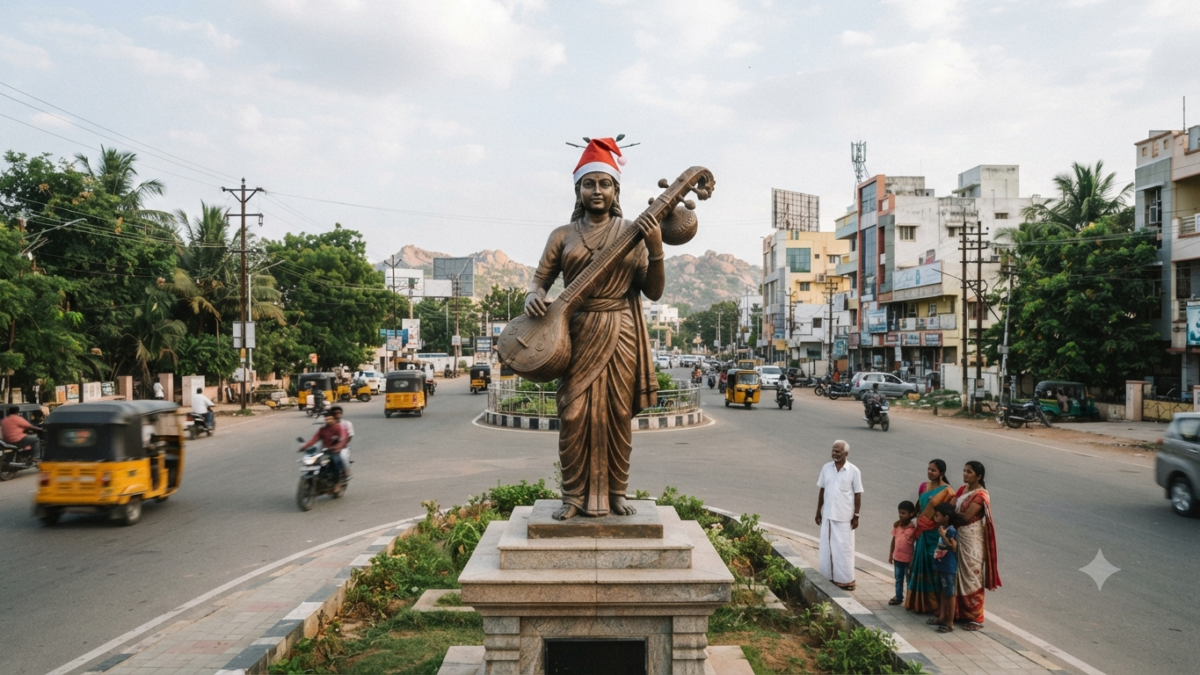
Santa cap on Annamacharya statue in Tirupati became a flashpoint on 24 December 2024, but the later police findings changed the story substantially. Early reports focused on protests and allegations of deliberate religious insult. CCTV review and the subsequent arrest pointed instead to one elderly man who police said had placed a cap he found near Annamayya Circle on the statue.
Independence note: Tirupati Official is an independent news and information website. It is not affiliated with Tirupati District Police, the Andhra Pradesh government, Tirumala Tirupati Devasthanams (TTD), or any political party. We do not accept police complaints, payments, or official applications.
This refresh separates early allegations from what police later reported. That distinction matters because several viral posts and headlines treated motive as settled before the CCTV review was complete.
Santa Cap on Annamacharya Statue: Key Facts
- Later police reporting says one man put the cap on the Tallapaka Annamacharya statue at Annamayya Circle on 23 December 2024.
- Hindu organisations and Bajrang Dal members protested on 24 December and sought action against the person responsible.
- Police removed the cap, examined nearby CCTV footage, and registered a case after a complaint to Tirupati East Police.
- By 25 December, police said the footage showed one man placing the cap on the statue. They urged people not to jump to conclusions while the inquiry continued.
- Police later arrested a 73-year-old man from Maharashtra on 26 December. News reports citing the police statement said he had found the red cap near the junction and placed it on the statue.
- Public reporting reviewed for this refresh does not establish an organised religious or political conspiracy behind the act.
The most important update is simple: the first-day description of unidentified “miscreants” did not remain the full picture. Later reporting attributed to Tirupati police narrowed the incident to one individual seen on CCTV and then arrested. See the Andhra Jyothy report and the later police-arrest report.
What Happened at Annamayya Circle in Tirupati?
The incident unfolded over several days, not in a single confirmed burst of events. Police later dated the act to 23 December, while the protest and first wave of reporting came on 24 December. Police then used CCTV footage to identify the person seen at the statue before making an arrest.
| Date | What was reported | Status |
|---|---|---|
| 23 Dec 2024 | One man put a red Santa-style cap on the Annamacharya statue at Annamayya Circle. | Later police reporting |
| 24 Dec 2024 | Hindu groups protested, police removed the cap, and complainants approached Tirupati East Police. | Widely reported |
| 25 Dec 2024 | Police review of CCTV showed one man placing the cap on the statue. | Police finding reported by media |
| 26 Dec 2024 | Police arrested a 73-year-old man near Tiruchanur flyover. | Police statement reported on 27 Dec |
The Times of India reported on 24 December that police reached the scene, removed the cap, and persuaded protesters to end their agitation after promising action. Andhra Jyothy later reported that police registered a case and identified a man through CCTV footage.
What Did the CCTV Footage Actually Show?
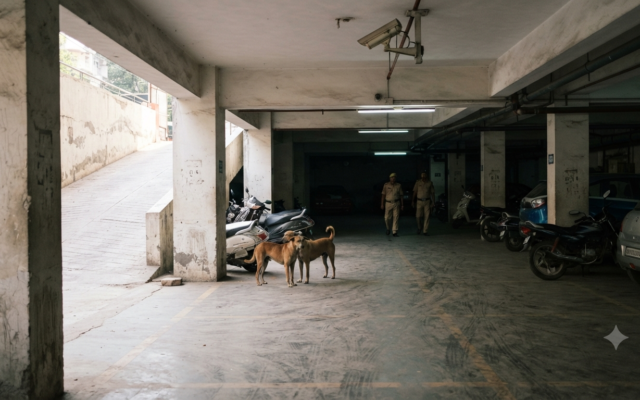
Police said the CCTV footage showed one man putting the cap on the statue. That finding was more specific than the first-day accounts, which referred generally to unidentified persons. Reports on 25 December said officers were still examining whether anyone had encouraged him or whether another motive existed.
That means the footage established an act, but not automatically a motive. A video of someone placing an object does not by itself prove a communal, political, or organised purpose. Police reporting available the next day focused on identifying the individual and tracing the circumstances.
Samayam Telugu reported that police urged the public to avoid assumptions and maintain restraint while they investigated. That is the safest way to read the record now: separate the visible act from theories about why it happened.
Santa Cap on Annamacharya Statue: What Police Said After the Arrest
The Santa cap on Annamacharya statue story gained a clearer factual ending when Tirupati police arrested a 73-year-old man on 26 December. A report published the next morning said police identified him through CCTV and detained him near the Tiruchanur flyover.
According to a report citing the police statement, the man had been in Tirupati for about 15 days and was living on the streets while collecting waste paper. Police said he found the red cap near Annamayya Circle and placed it on the statue. The report did not establish that he acted on behalf of a religious organisation or political group.
Include this later account whenever discussing the 24 December controversy. Without it, readers are left with the original allegation rather than the police follow-up.
Was the Incident in Tirumala or Tirupati?
The Santa cap on Annamacharya statue incident happened in Tirupati city, at Annamayya Circle, not at the Sri Venkateswara Temple in Tirumala. This distinction is easy to miss because several social posts and video titles used “Tirumala” while discussing the controversy.
The statue stands at a busy city junction associated with Annamayya Circle and the Rayalacheruvu Road area. The Times of India, Andhra Jyothy, and later Telugu reports all place the event in Tirupati. No reliable source reviewed for this refresh says anyone put the cap on a deity or inside the Tirumala temple complex.
That correction matters for both accuracy and communal sensitivity. The statue honours a saint-poet closely associated with Lord Venkateswara, but it is not a statue of Lord Venkateswara himself.
Who Was Tallapaka Annamacharya?
Tallapaka Annamacharya, widely known as Annamayya, was a 15th-century Telugu saint-composer associated with devotion to Lord Venkateswara. Tirumala Tirupati Devasthanams describes him as an early Telugu vaggeyakara, meaning a composer who created both lyrics and music.
TTD says Annamacharya composed about 32,000 keertanas in praise of Lord Venkateswara. The temple body also runs the Annamacharya Project to preserve, research, record, and popularise his work. Readers can verify this background on the official TTD Annamacharya Project page.
That legacy helps explain why the image of a Santa-style cap on his statue drew a strong reaction from some devotees and Hindu organisations. It explains the sensitivity, but it does not settle the intention of the person who placed the cap.
How Did the Protests and Political Reactions Develop?
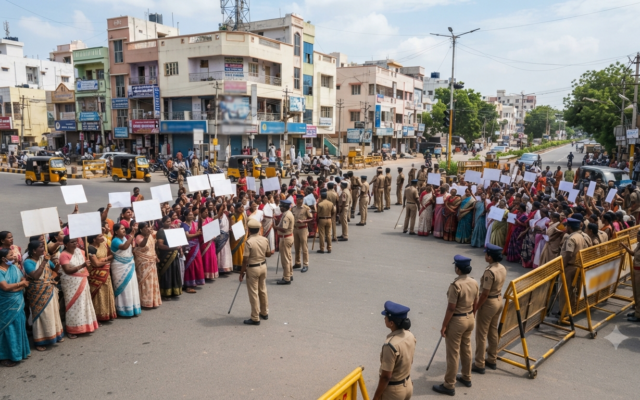
Protests began after local people noticed the cap and images circulated. Hindu organisations, including Bajrang Dal members, demanded that police identify the person responsible. Police reached the junction, removed the cap, and sought to calm the demonstration while promising an investigation, according to The Times of India.
The incident also entered Andhra Pradesh political debate. YSRCP leader and former TTD chairman Bhumana Karunakar Reddy criticised the state government over the episode and called for action, as Samayam Telugu reported.
The next day, Andhra Pradesh minister Nara Lokesh cited the CCTV footage while rejecting claims that the incident showed a broader attack on Tirupati’s religious identity. Samayam Telugu documented that response. These were competing political interpretations of the same developing event, not police findings about motive.
For readers, the key point is chronology. The political claims came while the investigation was evolving. Later police reporting about one arrested man should therefore be read alongside, not after ignoring, the early reactions. For a related example of local protest coverage, see our Tirupati women protest report.
Santa Cap on Annamacharya Statue: Confirmed vs Unproven Claims
The Santa cap on Annamacharya statue controversy is a useful example of why breaking-news labels can harden into “facts” too quickly. By separating confirmed events from unproven claims, the story becomes much clearer.
| Claim | What the record supports | Assessment |
|---|---|---|
| A cap was placed on the statue | Reported by multiple outlets and visible in images | Confirmed |
| Protests followed | Multiple reports describe Hindu organisations protesting | Confirmed |
| Police reviewed CCTV | Police findings were reported on 25 December | Confirmed |
| One man was arrested | Police statement reported on 27 December | Confirmed |
| The act was organised by a religious group | No supporting evidence found in the police follow-up reviewed here | Not established |
| The act was a political conspiracy | No supporting evidence found in the police follow-up reviewed here | Not established |
| The incident happened at Tirumala temple | Reports place it at Annamayya Circle in Tirupati city | Incorrect location |
This table does not claim that every investigative question was permanently closed. It reflects what the public record reviewed for this update supports and what it does not.
Why the Original Breaking-News Frame Needed an Update
The Santa cap on Annamacharya statue story shows how breaking coverage can capture the first reaction before the evidence settles. In this case, initial coverage correctly reported the cap, public anger, and police response. However, it could not yet include the later CCTV finding or arrest because those developments came on 25 and 26 December.
A refreshed story should therefore avoid treating words such as “desecration,” “conspiracy,” or “communal provocation” as established facts. Those terms appeared in statements from protesters, politicians, or commentary. The later police account supports a narrower factual description: police identified one person on CCTV and arrested him, while the publicly reported motive remained limited.
This is also why headlines that imply someone put the cap on “Venkanna” or Lord Venkateswara are misleading. The person put the object on a public statue of Annamacharya, a revered devotee and composer.
What Is Known About the Case Outcome?
Public reporting reviewed for this refresh confirms the complaint, CCTV review, identification, and arrest. However, it does not provide a reliable later court outcome, final charge disposition, or published finding establishing a communal motive.
Readers should not assume that an arrest equals a conviction. An arrest records police action during an investigation, while guilt and legal consequences depend on the later judicial process. If a court record or official police closure report emerges, update this page again.
For official public-safety information in Tirupati district, use the Tirupati District government portal or the relevant Andhra Pradesh Police channel. For broader local context, our Tirupati Police habitual offenders explainer covers police warnings, due process, and resident guidance. Tirupati Official does not receive complaints or represent law enforcement.
How to Read Viral Claims About the Incident
First, check the date of the post. A 24 December clip may show the protest but miss the CCTV update released the next day. Second, check whether the post reports a police finding or repeats a political or activist claim.
Next, verify the location. Annamayya Circle is in Tirupati city, while Tirumala is the hill shrine area. Finally, look for later reporting because the 26 December arrest materially changed the picture presented by the earliest headlines.
The strongest source chain is chronological: first-day reports for the protest, police-linked reports for the CCTV finding, and the later police statement for the arrest. That sequence is more reliable than a viral caption that freezes the story at its most emotional moment.
Santa Cap on Annamacharya Statue: Bottom Line
The Santa cap on Annamacharya statue incident was real, and the public protest in Tirupati was real. However, the later police account narrowed the event from vague references to unidentified “miscreants” to one elderly man identified on CCTV and arrested.
Police-linked reporting said he found the cap near the junction and placed it on the statue. The public record reviewed for this refresh does not establish that he acted for a religious group, a political organisation, or an organised campaign. That is the distinction readers should keep when sharing the Santa cap on Annamacharya statue story today.
Frequently Asked Questions
Where did the Santa cap on Annamacharya statue incident happen?
The incident happened at Annamayya Circle in Tirupati city, Andhra Pradesh. It did not happen inside the Tirumala Sri Venkateswara Temple complex. Several early social posts blurred Tirupati and Tirumala, so the location is worth stating clearly.
When was the cap placed on the Annamacharya statue?
Later police reporting said the man put the cap on the statue on 23 December 2024. The controversy became public on 24 December, when Hindu organisations protested and police responded at the junction.
Did police identify the person who placed the cap?
Yes. Police reviewed CCTV footage and later arrested a 73-year-old man on 26 December, according to reports citing the police statement. News outlets reported the arrest publicly on 27 December.
Did police say a Christian group was responsible?
No such finding appears in the police follow-up reviewed for this refresh. Early public commentary included communal allegations, but the later police reporting focused on one individual seen on CCTV. Readers should not convert an allegation into an established fact.
Was a statue of Lord Venkateswara given a Santa cap?
No. The statue was of Tallapaka Annamacharya, the Telugu saint-composer known for devotional compositions praising Lord Venkateswara. Some viral wording incorrectly described the statue as Venkateswara himself.
Why is Annamacharya important in Tirupati and Tirumala tradition?
Annamacharya is one of the most important Telugu devotional composers connected with Lord Venkateswara. TTD says he composed about 32,000 keertanas and maintains a dedicated Annamacharya Project to preserve and spread his works.
Was there proof of a political conspiracy?
The public police reporting reviewed here does not establish a political conspiracy. Political leaders made competing claims after the incident, so read those statements as political reactions rather than investigative findings.
What changed after the first reports on 24 December?
The key change was the CCTV identification and later arrest. Those developments replaced the vague early description of unidentified people with a more specific police account involving one man. That later information is essential to any accurate retelling of the controversy.