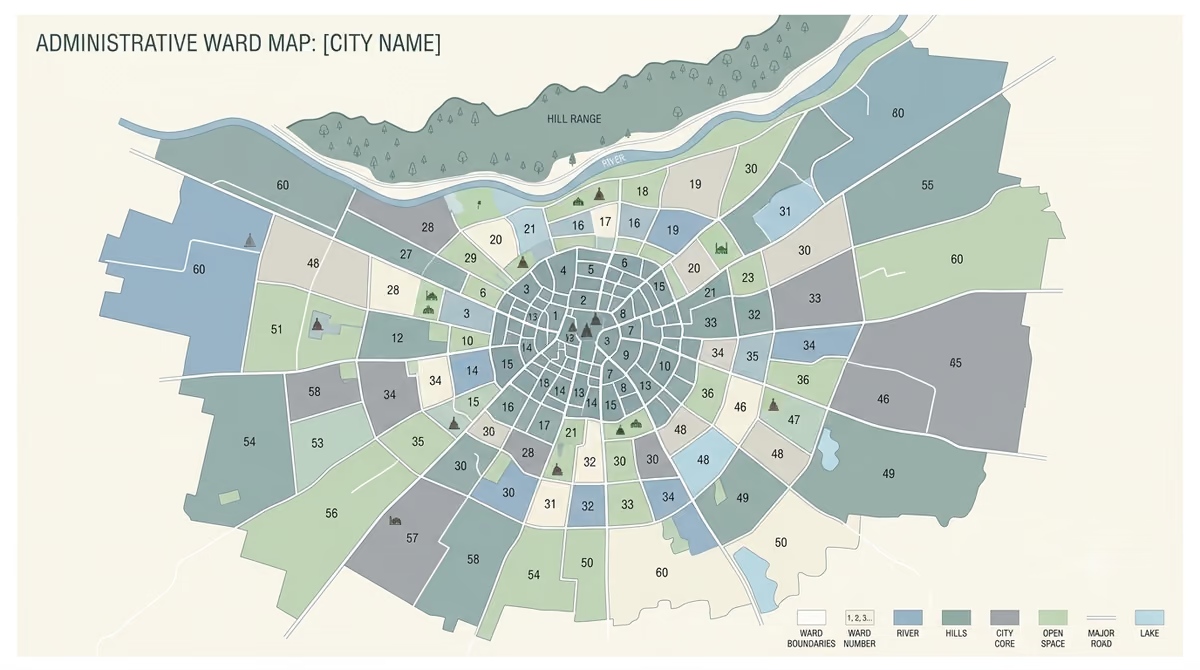
The TUDA Master Plan 2040 guides zoning, roads, and growth corridors across the Tirupati region.
Independent guide, not a government site: Tirupati Official is an independent city-news publication. We are not TUDA, and we are not affiliated with any government department. We do not approve layouts, process LRS applications, or take payments. Every application happens only on the official TUDA portal, tudaap.in, which we link below.
TUDA Master Plan 2040 at a Glance
Here are the essentials before the detail:
- What it is: a long-term land-use and infrastructure plan for the Tirupati region, with a horizon year of 2040.
- Who made it: the Tirupati Urban Development Authority (TUDA), the region’s main planning body since 1981.
- The governing law: the Andhra Pradesh Metropolitan Region and Urban Development Authorities Act, 2016. It replaced the older 1975 Act many sites still quote.
- What it decides: zoning, road alignments, green and heritage protection, and where TUDA can grant permission.
- The catch: a plot inside a growth zone is not automatically buildable. You still need layout approval and a permission.
What Is the TUDA Master Plan 2040?
The TUDA Master Plan 2040 is a statutory document that maps every parcel to a land-use zone. It also lays out the road, infrastructure, and conservation framework up to the year 2040. It works with the Zonal Development Plans and the Zoning and Development Promotion Regulations, 2040 (the ZDPRs). Those regulations spell out what you may build in each zone.
Because the plan takes its name from its horizon year, the “2040” is part of the official title. It is not a marketing label. TUDA publishes the plan and the ZDPRs on its own website, so the year there matches the year in this guide.
Who runs the plan, and under which law
The government set up the Tirupati Urban Development Authority (TUDA) in 1981. Its job is to guide orderly growth across Tirupati and the surrounding areas. Since 2016, it has worked under the Andhra Pradesh Metropolitan Region and Urban Development Authorities Act, 2016.
That Act repealed the earlier 1975 Act, yet many property blogs still cite the old law. When a source quotes the 1975 Act as current, treat that page with caution. The current law also widened TUDA’s role across the metropolitan region, which is why the plan reaches so far beyond the city.
What Area Does the Plan Cover?
TUDA’s planning area is large, and it stretches well beyond the temple town. Recent references put it at roughly 8,300 square kilometres under the 2016 Act. Older sources cite a smaller figure near 4,500 square kilometres, so the numbers differ over time. Confirm the current sanctioned area on the official portal before you rely on any single figure.
Within that area, the plan covers the core city plus a ring of mandals and villages. Some sources describe eight urban mandals along with dozens of rural ones. The practical point is simple. Your plot may sit far from the city yet still fall inside TUDA’s jurisdiction, so its rules can apply to you.
Key growth corridors in the plan
Not every part of the region grows at the same pace. A few corridors move faster because of airports, industry, and education campuses.
The corridor a plot sits in shapes both its zone and its timeline. A plot near the airport belt behaves very differently from farmland in the outer mandals.
Zoning and Land Use Under the Plan
Zoning is the heart of the master plan. It sorts land into categories, so homes, factories, and shops do not end up in conflict. The ZDPRs then set the rules for each category.
The main zones you will meet include:
- Residential: housing, apartments, and gated layouts, with everyday amenities.
- Commercial: shops, offices, and mixed retail spaces.
- Industrial: manufacturing and warehousing, kept away from dense housing.
- Institutional and public: schools, hospitals, and government use.
- Recreational and green: parks, open spaces, and buffer belts.
- Conservation: water bodies, forest belts, and heritage surroundings.
Each zone carries its own permissions. So one street may allow a building that the next street refuses. Never assume a use is fine; check the zone first.
How Do You Check a Plot’s Zone Before Buying?
Check the plot’s land-use zone and its layout approval before you pay a single rupee. A master-plan zone alone does not make land buildable. Skipping this step is how buyers lose money to disputes and unapproved layouts. Run these checks in order.
- Find the plot’s land-use zone in the Master Plan and the relevant Zonal Development Plan.
- Confirm the layout is TUDA-approved, with a valid LP number, in the authority’s records.
- Check the regularization status if the plot is older, since unapproved plots may need an LRS route.
- Verify any building permission through TUDA’s online DPMS system.
- Cross-check with the TUDA office and a property lawyer before you sign or transfer money.
These steps matter because a layout that ignores the master plan can stall later. It may face penalties or lose civic services. A little verification now saves a long dispute afterward.
For a deeper walkthrough, see our guide to TUDA-approved layouts in Tirupati and how to verify them.
TUDA Master Plan 2040 Roads and Connectivity
Roads are where the master plan becomes visible on the ground. The plan reserves alignments for wider roads and new links. So the plan marks some existing streets for widening in future.
One published proposal widens certain 50–60 foot roads to 80 feet, within the line of a proposed 100-foot master-plan road. Because the plan fixes these alignments, a plot on a widening line can lose frontage later. That is another reason to read the plan before you buy near a main road.
At the regional scale, the airport belt around Renigunta and the Tirupati–Srikalahasti road upgrade keep pulling investment outward. Better roads also raise pressure on civic services. Our report on Tirupati’s population growth and infrastructure pressure puts these numbers in context.
LRS and Layout Regularization
The Layout Regularization Scheme (LRS) lets owners of unapproved plots bring them into the legal fold. They pay charges and meet conditions to do so. It matters because many older plots in the region never received formal approval.
By most reports, the most recent LRS application window closed on 23 October 2025. Windows like this reopen from time to time. So if you missed it, confirm on the official portal whether a fresh extension exists. Do not pay any third party who claims to “fast-track” an LRS outside the official channel.
Infrastructure, Environment, and Heritage
The plan is not only about buildings. It also sets aside land for water, greenery, and the city’s cultural core.
On infrastructure, it frames upgrades to water supply, drainage, and public transport, so services keep pace with growth. On the environment, it protects green belts, tanks, and water bodies, and it backs afforestation. On heritage, it recognises the temple town’s character and the protected monuments nearby, which guides how surrounding land may be used.
These conservation zones are binding, not decorative. TUDA can refuse a building inside a protected belt or a water-body buffer outright. So read the environmental layers of the TUDA Master Plan 2040 as carefully as the residential ones.
How to Access the TUDA Master Plan 2040 PDF
You can view the TUDA Master Plan 2040 and its zoning regulations free of charge on the official website. Open the Planning section of tudaap.in. Then look for the Master Plan and the Zoning and Development Promotion Regulations documents.
Be careful here, because this is where scams appear. Some private sites copy the master-plan name, then charge a “processing fee” or ask for your personal details. They hand over a document that TUDA gives away for free.
The genuine plan sits on the government domain, and you pay no upfront fee to read it. When in doubt, start from the district government’s official TUDA page and follow its links.
What Buyers Get Wrong About the Plan
A few mistakes come up again and again, and each one is avoidable.
- Treating “in the zone” as “approved”: zoning shows what is possible, not what your specific plot permits.
- Trusting an old-law claim: if a broker cites the 1975 Act, they are behind by nearly a decade.
- Buying on a widening line: a road alignment can quietly eat into frontage and setbacks.
- Paying a fee for the “official PDF”: the real document is free on the government site.
- Skipping the lawyer: a title and zone check costs little next to the price of the land.
None of this is legal or investment advice. Treat it as a starting checklist. Then confirm everything with TUDA and a qualified professional for your own plot.
Before committing to a plot, cross-check it against the current TUDA approved-layouts list (with PDF download).
The Bottom Line
The TUDA Master Plan 2040 is the single most useful document for anyone who owns land or plans to buy here. It fixes the zones, the road alignments, and the green and heritage limits for years ahead.
Read the plan on the official portal, match your plot to its zone, and verify every approval before money changes hands. Do that, and a confusing document becomes a clear advantage. You can follow future updates through our TUDA coverage.
Frequently Asked Questions
What is the TUDA Master Plan 2040?
It is TUDA’s statutory land-use and infrastructure plan for the Tirupati region, with a horizon year of 2040. It maps each parcel to a zone. It also sets the road, green, and heritage frameworks, and works with the Zonal Development Plans.
What area does the TUDA Master Plan 2040 cover?
It covers the wider Tirupati region, not just the city. Recent references cite roughly 8,300 square kilometres under the 2016 Act, while older sources quote a smaller figure. Confirm the current sanctioned extent on the official TUDA portal.
How can I download the master plan PDF?
Open the Planning section on the official site, tudaap.in, and look for the Master Plan and the zoning regulation documents. The plan is free to view. Avoid any private site that charges a fee or asks for personal details to release it.
Does a plot in a master-plan zone mean I can build on it?
No. A zone shows what use is possible, yet you still need a TUDA-approved layout and a building permission for your plot. Older plots may also need regularization first. Always verify before you buy.
Which law governs the plan today?
The Andhra Pradesh Metropolitan Region and Urban Development Authorities Act, 2016 governs it. This Act replaced the older 1975 Act. Many websites still cite the 1975 law by mistake, so check the current source.
How do I check if a TUDA layout is approved?
Look up the layout’s LP number in TUDA’s approved-layout records. Then confirm building permissions through its online DPMS system. If a layout has no valid approval, treat it as high-risk. A lawyer can verify the title and the zone too.
Is the LRS regularization window still open?
By most reports, the most recent LRS window closed on 23 October 2025. Such windows reopen periodically. So confirm on the official portal whether a fresh extension exists before you plan any application.
How do I avoid fake TUDA master plan websites?
Start only from the government domain, tudaap.in, or the district site. A genuine portal never charges a fee just to view the plan. It also never asks for your Aadhaar or payment to “download” a public document. If a site demands money upfront, treat it as a scam and walk away.