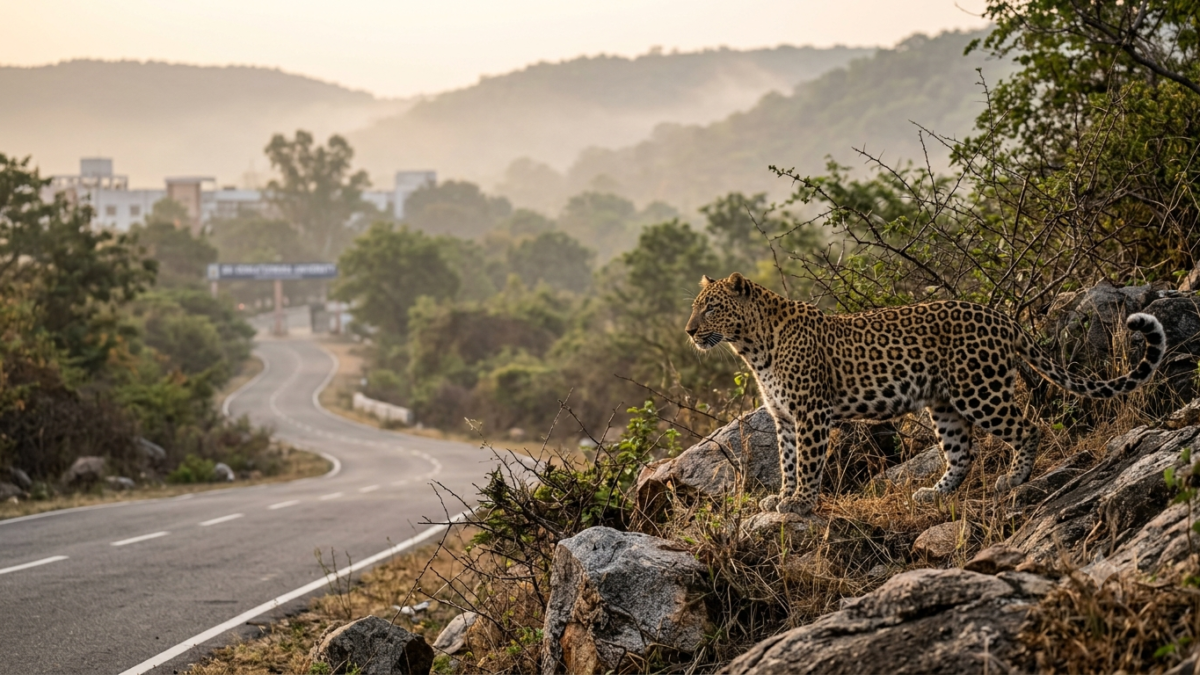
The SV University leopard that kept students and staff on edge for weeks finally walked into a forest-department cage in Tirupati on Sunday, April 6, 2025. Forest officials caught the male animal, and a veterinary team confirmed it was healthy. Officials then released it deep into the Seshachalam forest, far from human habitation. The capture closed months of tense sightings across three university campuses that sit right beside the hills.
Tirupati Official is an independent news site. We are not affiliated with Sri Venkateswara University, the Andhra Pradesh Forest Department, or Tirumala Tirupati Devasthanams (TTD). For official advisories, always check the departments linked below.
SV University Leopard Captured: Quick Facts
- What happened: Forest officials trapped a male leopard in a cage on the Sri Venkateswara University (SVU) campus.
- When: Late on Sunday night, April 6, 2025.
- Outcome: Vets checked the animal, found it healthy, and it went back into the forest.
- How: The forest department set four trap cages across the campus and nearby roads over roughly a month.
- Why it mattered: The big cat had been seen about 25 times since November 2024 near SVU, S.V. Vedic University, and S.V. Veterinary University.
SV University Leopard Captured After Weeks of Tension
After weeks of anxiety, the forest department finally caught the SV University leopard on the night of April 6, 2025. The animal walked into one of the cages placed on the sprawling campus. A veterinary team examined it, confirmed it was fit, and cleared it for release.
Forest Range Officer B. Sudarshan Reddy said his team would move the male leopard deep into the forest. This followed the guidelines of the National Tiger Conservation Authority (NTCA) and standard forest protocols. Because the animal was unhurt, officials could release it quickly instead of moving it to captivity.
The capture brought real relief to three campuses that had stayed on high alert for a month. Students, faculty, and nearby residents had grown fearful, so the trapping ended a long spell of worry.
How Forest Officials Trapped the Big Cat
The forest department did not rely on luck. Instead, it built a careful plan once sightings became frequent. Officials placed four trap cages at points the leopard was known to use.
These spots included the SVU surroundings, the Vedic University premises, and the busy Alipiri–Zoo Park road. The aim was simple. Officials wanted to stop the male leopard from straying further into student zones or residential streets.
Camera footage helped confirm the animal’s movements before the final trap worked. The leopard had entered the campus repeatedly from the abutting Tirumala forests. Since the cages sat along its usual paths, capture became only a matter of time.
Earlier efforts had come up empty. In February 2025, forest guards, university security, staff, NSS volunteers, and students walked the campus after reports of possible leopard cubs. However, that search found no trace of any cubs.
SV University Leopard Sightings: A Timeline
The SV University leopard did not appear overnight. Its presence built up over several months, and each sighting raised the pressure on officials to act. A staff member said the big cat had been seen nearly 25 times since November 2024.
Those sightings spread across SVU, S.V. Vedic University, and S.V. Veterinary University. Here is how the events unfolded before the capture.
- November 2024: Regular sightings begin near the three university campuses beside the Seshachalam range.
- January 2025: A leopard is seen near Alipiri at the foothill of the Tirumala Hills, alarming residents and travellers.
- February 2025: The forest department combs the SVU campus after suspicions of leopard cubs, but finds none.
- March 2025: A leopard is sighted on the Alipiri walkway, and CCTV footage in a shop captures its movement.
- Early April 2025: The animal attacks a fawn behind the university’s main library, so officials tighten precautions.
- April 6, 2025: Foresters trap the leopard in a cage and later release it after a health check.
Why Leopards Keep Entering the Campus
This capture solved one problem, yet it did not solve the bigger one. Leopards return to these campuses because the geography almost invites them. The universities sit directly against the Seshachalam forest, which is prime leopard country.
Several factors pull the animals toward people. First, the forest edge blurs into the campus, so there is no hard boundary. Second, stray dogs and small prey near hostels and roadside eateries offer easy meals. Third, poor waste disposal along busy stretches draws scavengers that leopards hunt.
Tirupati municipal commissioner N. Mourya inspected the Alipiri–Cherlopalli road and pushed for stronger cleaning and better waste systems. Because that road carries heavy pilgrim traffic, officials believe cleaner surroundings can lower the risk.
Growing urban pressure around the temple town only sharpens this human–wildlife overlap. Our report on Tirupati’s population growth and infrastructure strain shows how quickly the city is expanding into these fringe zones.
Leopards and the Seshachalam Forest
To understand these visits, look at the land itself. The Seshachalam hills form a dense, hilly forest that wraps around Tirupati and Tirumala. This range is classic leopard territory, with rocky cover, thick scrub, and steady prey.
Leopards are territorial and adaptable, so they follow fixed routes in search of food and space. When a campus, a road, or a walkway cuts across those routes, encounters follow. The three universities sit on exactly such a fringe, where forest meets classrooms.
Water and prey also shape their movement. During dry spells, animals roam wider for food, and edge zones near people often hold easy prey. This is why sightings cluster near hostels, eateries, and roads rather than deep inside the campus.
Who Handles Leopard Captures in Tirupati
Wild-animal rescues here follow a clear chain of command. The Andhra Pradesh Forest Department leads every capture, and its Tirupati range officers run the ground operation. Trained staff set the cages, watch the camera traps, and decide where a trapped animal goes.
Release decisions are not casual either. They follow the framework of the National Tiger Conservation Authority (NTCA), which also guides leopard handling. Under these rules, a healthy animal returns to suitable forest, while an injured or aged one may go to a rescue centre. Because the department followed this process, the SV University leopard walked free within a day of its capture.
Alipiri Walkway and Pilgrim Safety
The story did not stay inside the campus. Nearby, the Alipiri walkway became a worry for devotees too. Hundreds of pilgrims use this route every day to reach the Sri Venkateswara temple atop Tirumala, managed by Tirumala Tirupati Devasthanams (TTD).
The walkway runs about 9 km and has 3,550 steps up the hill. When a leopard appeared along it, TTD officials advised devotees to walk only in groups. Security staff also stepped up patrols to guard the crowds.
The danger was not just theoretical. In January 2025, a leopard startled a contract employee of TTD’s Aswini Hospital, Muni Kumar, on the Alipiri–Cherlopalli road. He panicked and fell from his bike when the animal leapt off the road median and crossed into the forest.
Many pilgrims travel this same corridor, so the incident rattled the community. If you are planning the climb, our guide to reaching Tirupati by train can help you time your journey for daylight hours.
SV University Leopard Safety: What Students and Pilgrims Should Do
A leopard in a shared space is a genuine safety matter, not just a headline. If you study, work, or travel around these areas, a few simple habits lower your risk. The forest department’s own advisories point in the same direction.
Warning boards near the campus asked people to avoid moving around before 7 a.m. and after 6 p.m. Those are the hours when leopards are most active, so plan travel for daylight when you can.
- Move in groups along forest-edge roads and the Alipiri walkway, because a single person is an easier target.
- Avoid dawn and dusk walks near wooded stretches, since leopards hunt in low light.
- Do not run if you spot one; back away slowly while facing the animal, and never turn and flee.
- Keep children and pets close, as small, quick movement draws a predator’s attention.
- Report sightings fast to campus security or the forest department, so officials can respond early.
These steps are practical, not alarmist. Leopards generally avoid people and attack only when cornered or surprised. Still, calm awareness protects you far better than panic.
What Happens Next: Ongoing Vigilance
One capture does not close the chapter. Forest officials themselves warned that the issue may not be fully resolved. Surveillance around the university areas continues, because other animals can wander in from the same forest.
The pattern is not new. In earlier years, foresters caught several leopards on this very campus and released them into the wild. Even after this April capture, later sightings kept the area on watch through 2026.
Technology now plays a bigger role too. Camera traps, quick alerts among campus staff, and faster forest-department response times all help. Since early detection buys time, officials can act before a leopard settles near people.
The longer-term fix lies in coexistence, not just cages. Cleaner roadsides, controlled stray-dog numbers, and quick reporting all reduce the reasons a leopard has to approach people. When habitat and city meet this closely, steady vigilance is the only realistic path.
Before You Go
The SV University leopard capture ended one frightening spell, yet it also revealed a longer truth about Tirupati. The city and the Seshachalam wilderness share a fragile edge. For now, the forest department’s swift action kept both students and the animal safe.
If you live, study, or travel near these forest fringes, treat leopard alerts seriously and follow official advisories. Stay in groups, avoid low-light hours near the woods, and report any sighting at once. For verified updates, rely on the Andhra Pradesh Forest Department and TTD rather than social-media rumours.
Frequently Asked Questions
Was the SV University leopard killed or released?
Officials released the SV University leopard; they did not kill it. After foresters trapped it on April 6, 2025, a veterinary team confirmed it was healthy. Officials then set it free deep in the forest, following NTCA guidelines.
When was the leopard captured at SV University in Tirupati?
Forest officials caught the leopard late on Sunday night, April 6, 2025. It had been sighted around the campus for several weeks before that. The animal walked into one of four cages placed across the grounds.
Where was the leopard released after capture?
Officials moved the leopard deep into the forest range, away from human habitation. This step followed National Tiger Conservation Authority protocols. The goal was to prevent the animal from returning to populated zones.
Are leopards still being seen around Tirupati?
Yes, occasional sightings continue near the university campuses and forest-edge roads. The area sits against the Seshachalam hills, so wildlife movement is common. Forest officials keep monitoring these zones for public safety.
Is the Alipiri walkway safe for pilgrims?
The Alipiri walkway is generally safe, and TTD provides security along the route. During leopard alerts, officials advise devotees to walk in groups and avoid isolated stretches at night. Daytime travel remains the safest option.
What should I do if I see a leopard in Tirupati?
Stay calm and do not run. Back away slowly while facing the animal, and keep children close. Then report the sighting to campus security or the forest department right away.
Why do leopards come to the SV University campus?
The campus sits right beside the Seshachalam forest, which is natural leopard habitat. Stray dogs, small prey, and roadside waste also draw the animals toward people. As a result, the university edge sees repeated visits.
How many cages did the forest department use?
Officials placed four trap cages across the area. They set them near the SVU surroundings, the Vedic University premises, and the Alipiri–Zoo Park road. Camera footage then guided the exact placement.
Who caught the leopard at SV University?
The Andhra Pradesh Forest Department led the operation. Forest Range Officer B. Sudarshan Reddy confirmed the capture of the male leopard. His team used four strategically placed trap cages to catch it.