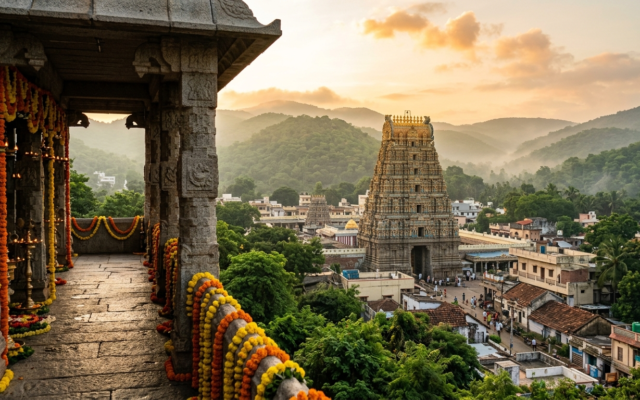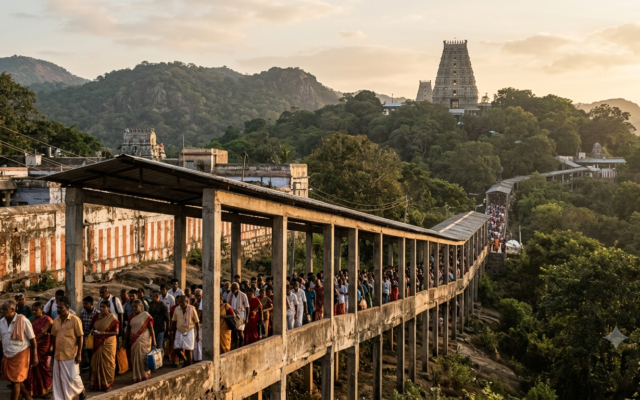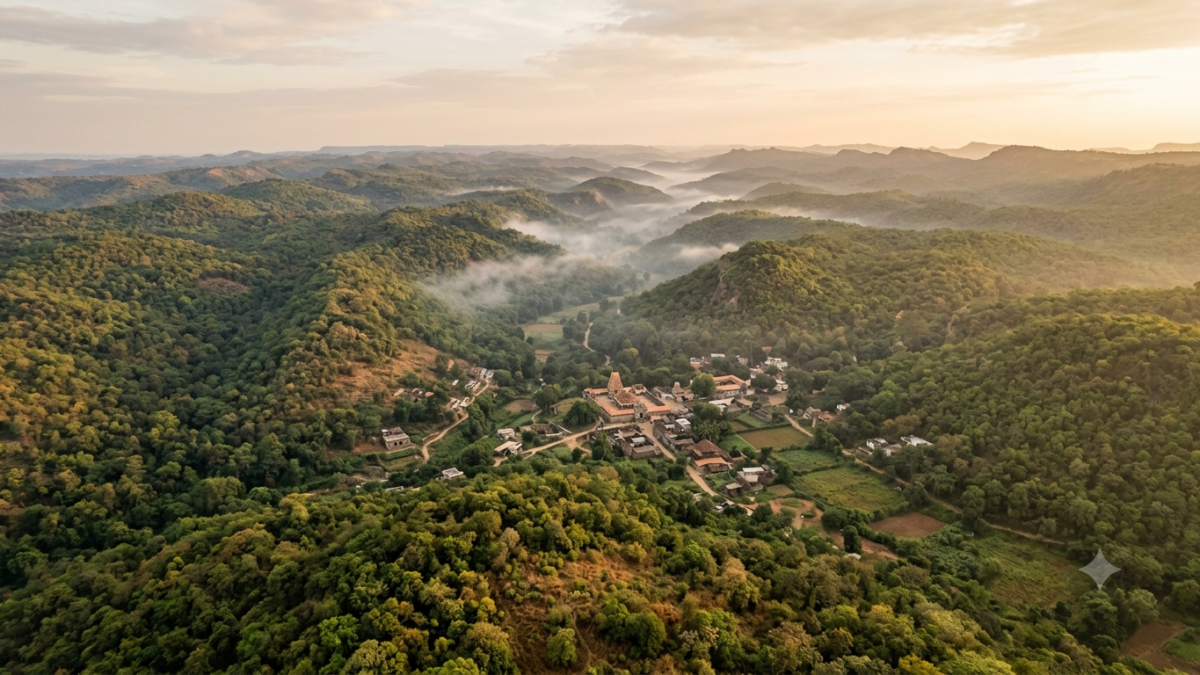
Tirumala Tirupati Devasthanams (TTD) has recorded 89.4 percent green cover in Tirumala. That is one of the highest forest-cover figures for any temple institution in India. The number comes from the latest India State of Forest Report. It reflects decades of steady work on the Seshachalam Hills, so it is not the result of a single planting drive.
This guide explains what the figure measures and how TTD guards the forest. It also shows how devotees can join the greening of the sacred hills.
Disclaimer: Tirupati Official is an independent news and information guide. This website is NOT the official website of Tirumala Tirupati Devasthanams. It is NOT affiliated with, endorsed by, or connected to TTD or any government body.
We do not accept donations, bookings, or payments. For official announcements, seva bookings, and green-scheme donations, please use only the official TTD portals linked in this article.
Green cover in Tirumala at a glance
Here are the verified headline facts before we go deeper:
- TTD limits record 89.40 percent forest cover, as per the latest India State of Forest Report.
- The TTD Forest Department manages a total forest area of about 2,719 hectares.
- Roughly 2,431 hectares sit under active forest vegetation.
- The department has protected the Seshachalam Hills since 1980.
- Andhra Pradesh Chief Minister N. Chandrababu Naidu publicly congratulated TTD on the milestone in May 2026.
What does 89.4% green cover in Tirumala mean?
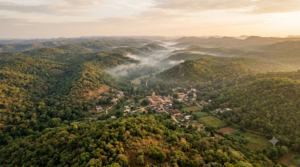
The 89.4 percent green cover in Tirumala is easy to picture. Nearly nine of every ten hectares under TTD control carry living forest. Out of about 2,719 hectares of TTD forest area, close to 2,431 hectares are under vegetation. That density places TTD among the leading institutions in the country for forest cover.
This is a measured figure, not a slogan. It comes from the India State of Forest Report, the biennial national assessment published by the Forest Survey of India. Because the number is drawn from a government survey, it carries real weight.
A high percentage matters here because the terrain is difficult. The Seshachalam Hills lie in a rain-shadow zone, so rainfall stays low and the natural cover is dry deciduous forest. Holding nearly 90 percent green cover in such a semi-arid landscape takes sustained effort year after year.
How TTD measures and reports green cover in Tirumala
The TTD Forest Department tracks the green cover in Tirumala, and it works under a Deputy Conservator of Forests. The structure mirrors a regular state forest division, since these hills are ecologically sensitive and legally protected.
The four forest ranges that run the hills
There are four forest ranges in all. Two cover Tirumala and two cover Tirupati. A Forest Range Officer heads each one. Below them, Deputy Range Officers, Forest Section Officers, and field staff coordinate protection every day.
This on-ground chain matters because a forest figure only holds if someone guards it daily. The department does far more than plant trees.
It also supplies sandalwood logs, firewood, and Darbha grass for temple rituals. On top of that, it maintains about 24 kilometres of road dividers and 25 gardens across the two towns. You can track related work through ongoing Tirumala news updates.
The Seshachalam Hills: the forest behind the figure
To understand the green cover in Tirumala, you need to know the range it sits on. The Tirumala temple crowns the Seshachalam Hills, which form part of the Eastern Ghats in southern Andhra Pradesh. The name means the Hill of Sesha, the serpent of Lord Vishnu, whose seven hoods are read into the seven hills.
These hills form the core of the Seshachalam Biosphere Reserve. India notified it on 20 September 2010, so it became the first biosphere reserve in Andhra Pradesh. It later joined UNESCO’s Man and the Biosphere network. The reserve spans roughly 4,756 square kilometres across the Tirupati and Annamayya districts.
The reserve is not one flat block of jungle. It rises through steep slopes, rocky cliffs, and deep gorges, and its peaks climb well above the plains. This varied terrain is part of why so many rare species survive here, since each altitude band suits different plants and animals.
Red Sanders, slender loris and the endemics TTD protects
The reserve holds around 1,756 flowering plant species, and eleven of them grow nowhere else on Earth. The most famous is Red Sanders, or Pterocarpus santalinus. It is a slow-growing tree with deep red heartwood, and the IUCN lists it as Endangered. Because it is native almost only to these hills, smugglers target it relentlessly.
The fauna is just as striking, since these hills sit in a recognised biodiversity hotspot. The forests shelter the slender loris, the golden gecko, and the Indian giant squirrel. They also hold mouse deer, leopards, pangolins, and well over 150 bird species. So when TTD reports strong forest cover, it is really reporting habitat for creatures that survive almost nowhere else.
How TTD protects green cover in Tirumala
Protecting green cover in Tirumala is a security operation as much as a gardening one. Because Red Sanders and sandalwood fetch huge illegal prices, the forest faces constant pressure from felling and poaching gangs.
Patrols, fire lines and native replanting
To counter this, 24-hour flying-squad teams patrol the jungle around the clock. Fire is the other great threat, so the department maintains about 26.5 kilometres of fire lines every year. Trained teams then respond fast whenever a blaze starts.
Over time, the department has also changed what it plants. For years, exotic Acacia plantations dominated parts of the hills. Now TTD is restoring native vegetation in their place, since local species suit this soil far better.
The revival list reads like a catalogue of sacred Indian trees. It includes Peepal, Banyan, Cluster Fig, Indian Medlar, Champak, Mango, Sandalwood, Red Sanders, Gooseberry, and Jamun. TTD plants these in phases across the slopes. Native trees hold the soil, feed local wildlife, and cope with the dry climate.
Key figures: green cover in Tirumala by the numbers
The table below gathers the verified data points in one place. Treat any operational detail as subject to change, and confirm current figures on the official TTD source before you quote them elsewhere.
| Metric | Figure | Source |
|---|---|---|
| Forest cover under TTD limits | 89.40% | India State of Forest Report |
| Total TTD forest area | ~2,719 hectares | TTD Forest Department |
| Area under vegetation | ~2,431 hectares | TTD Forest Department |
| Forest ranges | 4 (2 Tirumala, 2 Tirupati) | TTD Forest Department |
| Fire lines maintained yearly | ~26.5 km | TTD Forest Department |
| Protection active since | 1980 | TTD Forest Department |
Green schemes devotees can join
You do not need to be a forester to add to the green cover in Tirumala. TTD runs devotional afforestation schemes that let pilgrims plant a tree as an offering. This is a genuine point of information that most news reports skip.
The Vruksha Prasadam campaign lets devotees choose a plant tied to their birth star or zodiac sign. TTD grows these in dedicated nakshatra gardens near Alipiri. There are also larger donation schemes, such as Vruksha Samvardhanam, where a donor sponsors a cluster of saplings on the hills.
TTD routes these donations only through its official portal. The temple body notes that such green-scheme donations may qualify for income-tax exemption. This is not financial or tax advice, so please confirm the current rules with the official portal and a qualified advisor before you donate.
Divya Oushadha Vanam and the medicinal-plant gardens
TTD is also developing the Divya Oushadha Vanam, a themed medicinal-plant garden on the hills. It is planned with 13 sections that cover sacred, aromatic, and healing plants. The aim is to teach devotees, students, and researchers about traditional plant medicine.
Alongside it, the wider TTD Gardens span hundreds of acres with four nurseries that raise lakhs of plants each year. These gardens also supply the fresh flowers used daily in temple worship, so greenery and ritual stay tightly linked here. You can read more about temple operations on the official TTD website.
Why the green cover in Tirumala matters
Beyond the headline, a healthy forest does real work. Because it stays dense and continuous, the vegetation across these 2,431 hectares stores carbon, cools the hills, and steadies the rainfall the region depends on. For a semi-arid zone, that ecological buffer is priceless.
The forest also feeds the streams and tanks that supply the plains below. When the canopy holds, the monsoon soaks in slowly instead of running straight off, so the water supply for the whole region stays steadier.
There is a spiritual reading too, and TTD leans into it openly. In the Sanatana tradition, forests and wildlife count as sacred. So TTD frames their protection as service to the divine. The Chief Minister echoed exactly that idea when he praised the milestone.
What the forest means when you visit Tirumala
For a pilgrim, the green cover in Tirumala is what makes the hill climb bearable. The forest canopy shades the Alipiri and Srivari Mettu footpaths, and it keeps the temple town noticeably cooler than the plains below. If you are planning a trip, check current TTD darshan and seva details first.
A short safety note is worth adding here, since the climb is real physical exercise. The footpath climb runs to thousands of steps, and the hills turn hot by midday. So carry water, pace yourself, and rest in the shaded stretches.
Elderly pilgrims, pregnant women, and anyone with a heart or breathing condition should consider the bus route instead. If in doubt, consult a doctor before you attempt the walk.
Simple ways to respect the hills
Pilgrims can also protect this forest through small, everyday habits. Carry your waste back down, avoid feeding or disturbing the deer and monkeys, and never pluck plants or carry seeds off the hill. Because the Seshachalam forest is a protected biosphere, even small acts of care add up across millions of annual visitors.
The bottom line
The 89.4 percent green cover in Tirumala is a rare good-news story. It is a working forest, guarded for over four decades, holding firm on difficult terrain. It shelters endemic species, cools a major pilgrim town, and ties conservation to faith in a way few places manage.
So if you visit, tread lightly. If you want to give back, send any green donation through the official TTD portal, and please avoid third-party sites.
Frequently asked questions
What is the current green cover in Tirumala?
TTD limits record 89.40 percent forest cover, according to the latest India State of Forest Report. Nearly 2,431 hectares out of about 2,719 hectares of TTD forest land are under vegetation.
Who manages the forest on the Tirumala hills?
The TTD Forest Department manages it, working under a Deputy Conservator of Forests. It runs four forest ranges, two in Tirumala and two in Tirupati. A Forest Range Officer leads each one.
Why is the Seshachalam forest so important?
It is India’s first biosphere reserve in Andhra Pradesh, notified in 2010. It holds around 1,756 plant species, including rare endemics such as Red Sanders. It also shelters wildlife like the slender loris and golden gecko.
How does TTD protect the forest from smugglers and fire?
Flying-squad teams patrol the forest 24 hours a day to curb illegal felling and poaching. The department also maintains around 26.5 kilometres of fire lines each year. Trained teams then handle rapid fire response.
Can devotees plant a tree in Tirumala?
Yes. Through schemes like Vruksha Prasadam and Vruksha Samvardhanam, devotees can sponsor saplings, including star-based plants grown near Alipiri. Donations go through TTD’s official channels and may qualify for tax exemption.
What is Red Sanders and why is it protected?
Red Sanders is a slow-growing tree with red heartwood, native almost only to the Seshachalam Hills. The IUCN lists it as Endangered, and its high illegal value makes it a constant target for smugglers.
Is Tirupati Official the official TTD website?
No. Tirupati Official is an independent information guide, and it is not affiliated with TTD. For official bookings, donations, and announcements, please use the official TTD portals only.