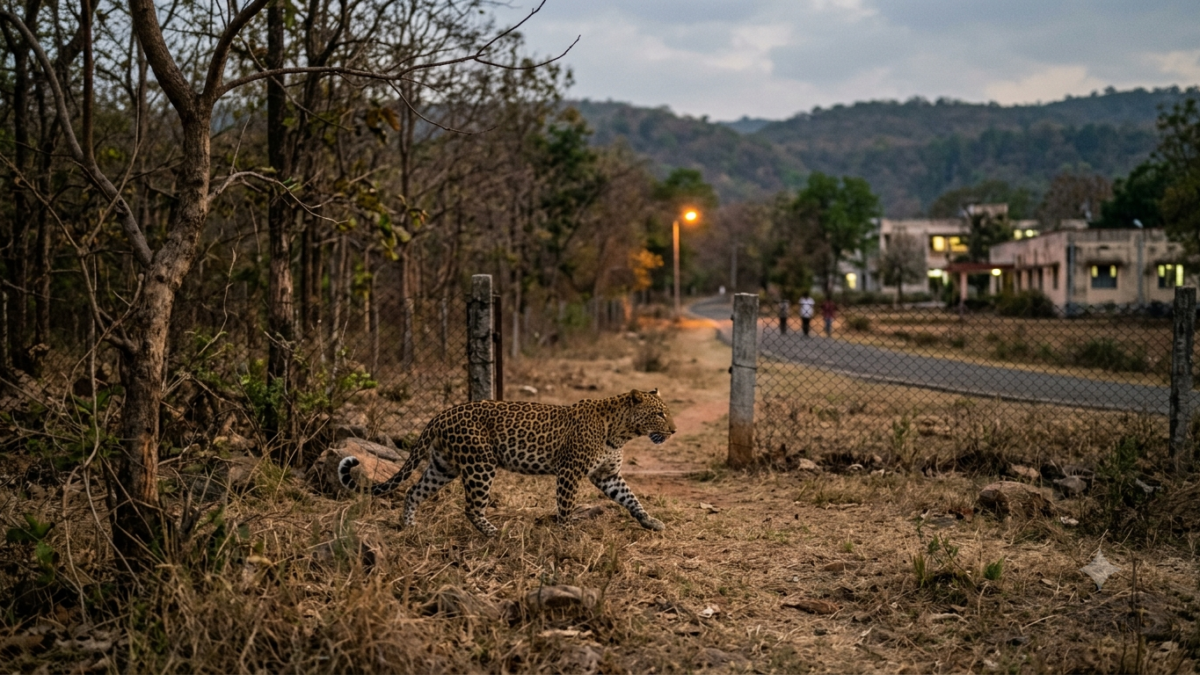
The leopard sightings in Tirupati universities that rattled students through 2025 never fully faded, and by the end of that year forest officers believed at least three big cats were still moving through the Sri Venkateswara University zone alone. Campus CCTV caught one trying to snatch poultry near the staff quarters before it slipped back into the trees.
For thousands of students in hostels along the forest edge, the fear is real. Yet the facts are calmer than the rumours, so this guide sets out what has actually happened, why it keeps happening, and how to stay safe.
Tirupati Official is an independent city news publication. We are not affiliated with Sri Venkateswara University, the Andhra Pradesh Forest Department, or Tirumala Tirupati Devasthanams (TTD), and we do not issue advisories ourselves. Always follow the official campus notices and forest department instructions linked below.
Leopard Sightings in Tirupati Universities: Key Facts at a Glance
- Where: Sri Venkateswara University (SVU), SV Vedic University, and SV Veterinary University, plus the Alipiri–Cherlopalli belt.
- How often: a university staff member counted roughly 25 sightings from November 2024 onward; a later spell logged about 15 along one road in three months.
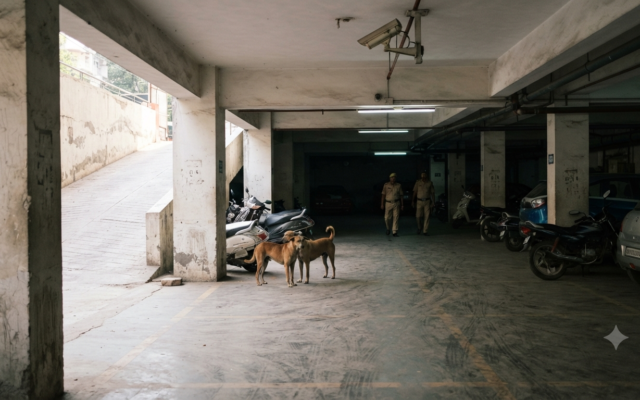
- The cause: the campuses sit on the forest edge, and food waste draws stray dogs, which in turn draw leopards.
- Injuries: no student or resident has been killed; the one injury was a TTD worker who fell off his bike after a startle.
- Official view: forest officers say the animals avoid people and pose no direct threat unless cornered.
What Is Behind the Leopard Sightings in Tirupati Universities?
The leopard sightings in Tirupati universities are not a freak event. The Seshachalam hills ring Tirupati’s western campuses, and decades ago the state leased the university land from that same forest zone. Because the boundary between campus and jungle is thin, wild animals cross it easily.
Three institutions sit right in this belt. Sri Venkateswara University, SV Vedic University on the Alipiri–Chandragiri bypass, and SV Veterinary University all border the same forest. Students at each have reported big cats near hostels and academic blocks, mostly after dark.
A single quotable fact frames the whole story. Forest officials have said a leopard was spotted nearly 25 times across these three campuses from November 2024 onward, according to a university staff member cited in local reporting. That is why the alert has lasted so long.
Timeline of Leopard Sightings in Tirupati Universities
A clear chronology helps, because scattered headlines make the situation look more chaotic than it is. The table below tracks the confirmed milestones reported over roughly a year.
| When | Where | What happened |
|---|---|---|
| Nov 2024 onward | SVU, Vedic, Veterinary campuses | Sightings begin; about 25 logged over the following months |
| Jan 2025 | Alipiri–Cherlopalli road | A TTD contract worker fell from his bike after a close encounter and was injured |
| Feb 2025 | SVU campus | A leopard attacked a fawn near the main library; a 100-strong search found no cubs |
| Mar 2025 | Alipiri walkway | CCTV caught a leopard; TTD asked pilgrims to use the steps in groups |
| Apr 2025 | SVU campus | Forest staff trapped a leopard in a cage, a vet checked it, and the team released it |
| Oct–Nov 2025 | SVU, Vedic, Mangalam | Fresh sightings; a leopard killed a pet dog in Mangalam; three cats tracked in the SVU zone |
The capture in April 2025 mattered, yet it did not end the story. Because several leopards use the same forest belt, removing one animal simply left room for others. That is the single most important point competing reports miss.
Why Leopards Keep Entering the Campuses
Wildlife experts point to a simple food chain, not to aggression. Hostels and canteens generate food waste, and that waste feeds a growing population of stray dogs. Leopards, in turn, follow the dogs, since a stray is far easier to catch than a deer.
A senior forest officer put it plainly in late 2025: poor waste management around hostels is the root of the problem. When bins overflow, dogs gather, and the cats are never far behind. So the fix is less about the leopards and more about the rubbish. Manage the waste and the stray-dog numbers, officials argue, and the leopards lose their reason to visit.
The habitat pressures at work
Several longer-term forces push the animals closer to people:
- A thin forest edge: the campuses were carved out of leopard country, so encounters were always likely.
- Easy prey: stray dogs around hostels give leopards a reliable meal without deep hunting.
- Water and cover: when forest streams run low, animals wander toward greener, watered campus land.
- Open grounds: large campuses with gaps in fencing let a cat move in and out unseen.
How Officials Responded to Leopard Sightings in Tirupati Universities
The Andhra Pradesh Forest Department has treated the leopard sightings in Tirupati universities as a management task, not a hunt. Its response has grown steadily as the sightings continued. The main measures are worth knowing, because they shape how the campuses feel today.
- Cage traps: forest teams placed four baited cages across SVU, then caught and released one leopard in April 2025.
- Camera traps: hidden cameras now track movement and map the routes the cats use.
- Clearing undergrowth: teams have cut thick vegetation along the SVU boundary and the Tirumala footpaths to improve sightlines.
- Rescue teams on standby: dedicated units are ready to respond if a leopard, bear, or elephant strays into housing.
- 24-hour watch: officials stepped up surveillance around Alipiri and the campuses after renewed sightings.
Night movement restrictions
Campuses have limited night movement whenever activity spikes. The exact hours have shifted over time and differ by institution. Early warning boards asked people to avoid moving roughly between dusk and dawn, while SVU’s later restriction closed internal roads from about 7 p.m. to 7 a.m.
Because these timings change with the situation, treat any single figure as approximate. Always check the current notice posted at your campus gate or hostel before planning a late walk.
Is the forest department trying to capture every leopard?
No. By late 2025 officials had shifted away from trapping, since the animals had shown no aggression toward people. A district forest officer said the aim was to prevent encounters rather than to create conflict. Leopards usually avoid humans, so panic, not the cat, is often the bigger danger.
Beyond the Campuses: The Alipiri Pilgrim Footpath
The story is not confined to lecture halls. The same forest belt feeds the Alipiri footpath, the stepped route that hundreds of devotees climb each day to reach the Tirumala temple. That 9-kilometre path has 3,550 steps, and it runs straight through leopard country.
During 2025 a leopard turned up on the walkway more than once. A shopkeeper’s CCTV caught one, while another was seen near Muggu Bavi before it slipped back into the woods. In response, TTD asked pilgrims to climb in groups and posted extra security along the route.
Nearby stretches have seen movement too. Officials have logged wildlife at Srivari Mettu, the Alipiri–Zoo Park road, Mangalam, and Jeeva Kona. If you plan to walk up to Tirumala, start in daylight, stay with others, and keep children close on the quieter sections.
Staying Safe During Leopard Sightings in Tirupati Universities
Safety here is mostly about routine and common sense. Leopards in this belt are shy and nocturnal, so a few habits sharply cut the already small risk. This matters most for hostel students, night-shift staff, and anyone walking the Alipiri footpath.
- Avoid walking alone after dark, especially near forested edges and unlit stretches.
- Stick to lit, busy paths when you move around campus at night.
- Do not leave food waste outdoors, because it draws the dogs that draw the cats.
- Keep pets and small livestock indoors at night if you live near the forest belt.
- Report any sighting at once to campus security or the forest department.
What should you do if you see a leopard?
Stay calm and do not run, since sudden movement can trigger a chase reflex. Back away slowly while facing the animal, and give it a clear escape route. Never approach, corner, or photograph it up close. Then alert campus security or the forest control room so trained staff can respond.
For elderly residents, pregnant women, and anyone with reduced mobility, the advice is stricter: avoid isolated outdoor routes at night entirely during an active alert. A wildlife encounter is a health-and-safety matter, so follow official instructions rather than social-media tips.
The Bigger Picture Behind Leopard Sightings in Tirupati Universities
Long-term fixes are now on the table, and they go well beyond trapping. University administrators and conservationists have pushed for structural changes, because catching cats one by one clearly does not hold.
- Boundary fencing: planners have proposed a tall iron fence along the Alipiri–Cherlopalli stretch to separate forest from campus.
- Waste management: better disposal to shrink the stray-dog population that lures leopards.
- Green corridors: safe passages so wildlife can move without crossing crowded areas.
- Tracking and inspection: camera networks and regular patrols to spot movement early.
The honest takeaway is that Tirupati’s campuses share a boundary with living leopard habitat. Coexistence, not eradication, is the realistic goal. As one SVU coordinator argued, only joint action by the universities, TTD, the municipality, and the forest department will ease the pressure over the long run.
Before You Head to Campus
The leopard scare around Tirupati’s universities is serious but manageable, and the record so far is reassuring: plenty of sightings, just one minor injury, and no human deaths. Keep to lit paths after dark, cut the food waste that feeds the cycle, and report anything you see.
For official updates, rely on your campus notices and the Andhra Pradesh Forest Department rather than forwarded messages. If you spot a leopard, keep your distance and call for trained help straight away.
Frequently Asked Questions
Are the leopard sightings in Tirupati universities still happening in 2026?
Sightings continued through late 2025, with three leopards tracked in the SVU zone. The situation can change month to month, so check current campus notices and forest department updates for the latest position. No all-clear has been formally declared.
Which universities in Tirupati have reported leopards?
Sri Venkateswara University, SV Vedic University, and SV Veterinary University have all reported sightings. All three sit along the same forest edge on the western side of the city. The nearby Alipiri–Cherlopalli road has also seen repeated activity.
Has anyone been hurt by a leopard in Tirupati?
No death has been reported. The one documented injury was a TTD contract worker who fell from his motorcycle after a startle on the Alipiri–Cherlopalli road, not from a direct attack. Forest officials stress that these leopards avoid people.
Why do leopards come onto the campuses?
They follow food. Hostel and canteen waste attracts stray dogs, and leopards hunt those dogs because they are easy prey. The thin forest boundary and low water in the hills add to the pull.
What are the night-time restrictions on campus?
Campuses limit night movement during active alerts, and the hours have varied. SVU’s later restriction closed internal roads from roughly 7 p.m. to 7 a.m. Always follow the exact timing on the current notice at your campus.
What should I do if I encounter a leopard?
Do not run. Back away slowly while facing the animal, give it space to leave, and never approach it. Then report the sighting to campus security or the forest department so trained teams can act.
Who do I contact about a leopard sighting?
Alert your campus security first, then the Andhra Pradesh Forest Department or the police on 100 in an emergency. Confirm the current local forest control-room number through the official forest department website, since helpline numbers can change.
Related Reading on Tirupati Official
- Andhra Pradesh Initiates Elephant Population Estimation in Tirupati Region
- Tirupati Population Growth: Census Data and Infrastructure Pressure
For official information, see the Andhra Pradesh Forest Department and Sri Venkateswara University.