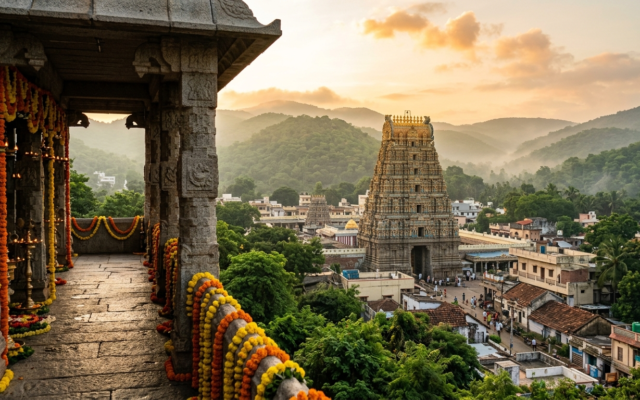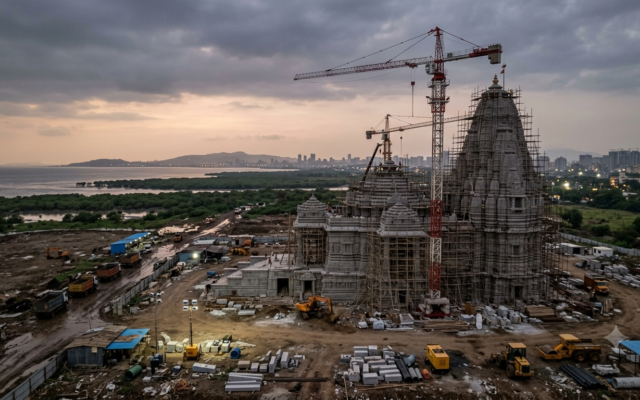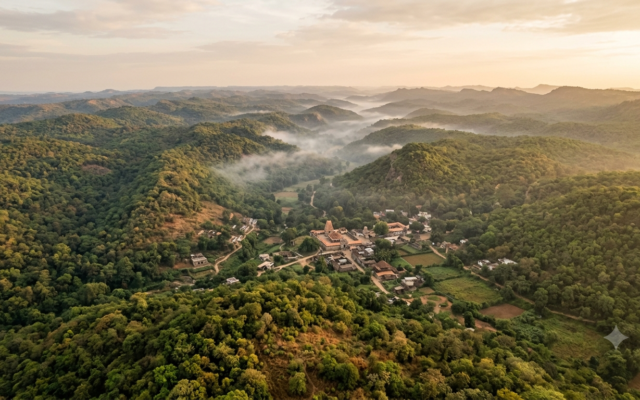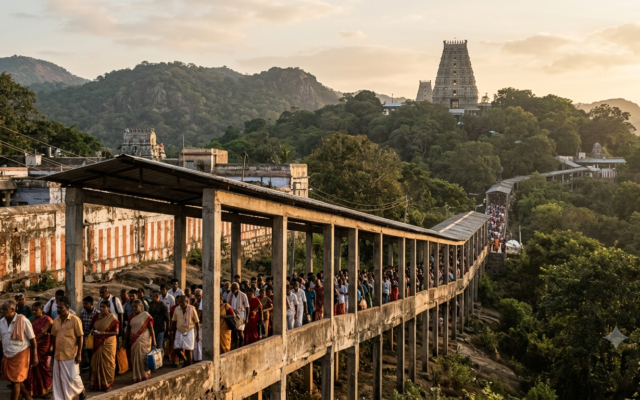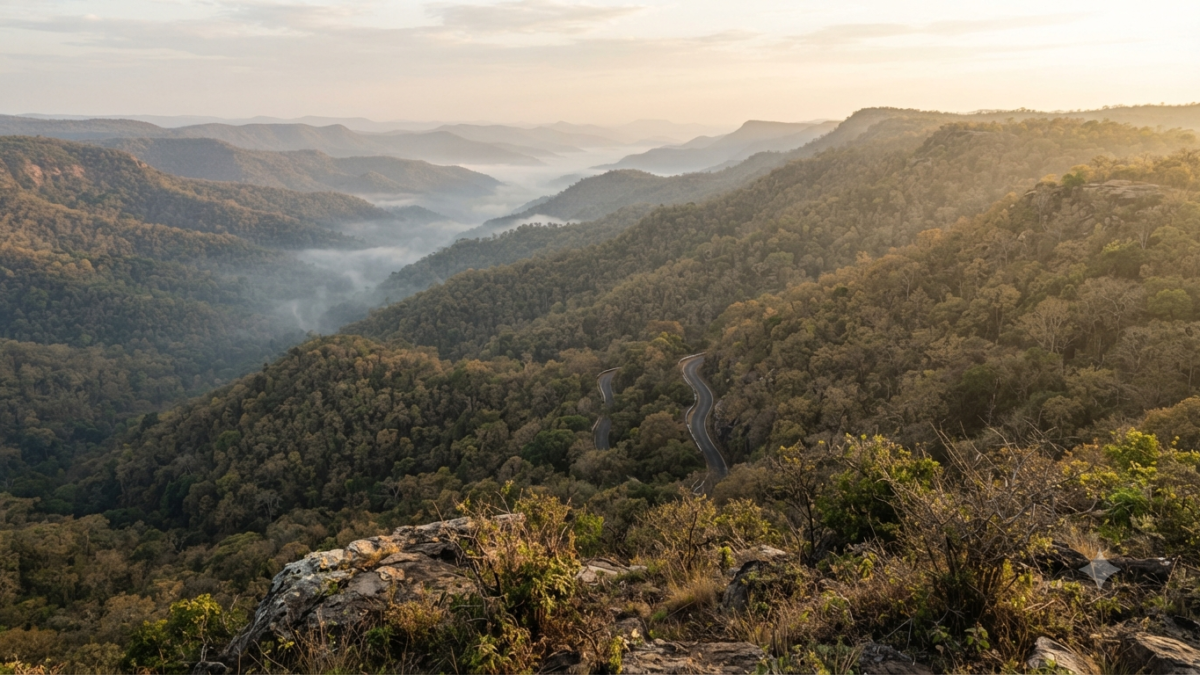
TTD biodiversity conservation has moved well beyond one-off tree-planting drives. The Tirumala Tirupati Devasthanams (TTD) Forest Department guards roughly 2,719 hectares of hill forest on the Seshachalam ranges. Because that terrain is dry and heavily walked, a three-year restoration plan worth about ₹4 crore now sits behind the work. Most reports stop at a headline percentage, so this guide sets out what the programme actually funds and what it changes on the ground.
Disclaimer: Tirupati Official is an independent news and information guide. This website is NOT the official website of Tirumala Tirupati Devasthanams, and it is NOT affiliated with, endorsed by, or connected to TTD, the Andhra Pradesh Forest Department, or any government body. We do not accept donations, bookings, or payments. For official announcements and green-scheme donations, use only the official TTD portals linked below.
TTD biodiversity conservation at a glance
Here are the verified headline facts behind TTD biodiversity conservation before the detail begins.
- The TTD Forest Department has protected the Seshachalam Hills since 1980.
- It manages about 2,719 hectares, of which roughly 2,431 hectares carry forest vegetation.
- The latest India State of Forest Report records 89.40 percent forest cover under TTD limits.
- A ₹4 crore three-year regeneration plan was cleared by the trust board in May 2025.
- Native species are replacing exotic Acacia across 576 hectares, in phases.
- Four forest ranges, 24-hour flying squads and about 26.5 km of fire lines hold the line each year.
What TTD biodiversity conservation actually covers
TTD biodiversity conservation covers four linked jobs: protecting existing forest from felling and fire, restoring degraded patches with native species, reducing conflict between wildlife and pilgrims, and supplying the plant material temple rituals need. The Forest Department runs all four, and it works under a Deputy Conservator of Forests rather than a purely religious wing.
There are four forest ranges in total. Two sit in Tirumala and two in Tirupati, each headed by a Forest Range Officer. Below them, Deputy Range Officers, Forest Section Officers and field staff coordinate daily protection.
That structure matters because the pressure here is unusual. Red Sanders and sandalwood fetch high illegal prices, so the hills face steady felling and poaching attempts. Flying-squad teams therefore patrol around the clock, while trained crews handle fire response through the dry months.
The ₹4 crore TTD biodiversity conservation plan, explained
The most concrete recent step is a funded regeneration project. The TTD trust board cleared it through Resolution 285 on 20 May 2025, according to a Deccan Chronicle report published that June. An original estimate of ₹6.5 crore was trimmed to about ₹4 crore after review.
The plan covers 3,035 hectares inside the TTD forest zone, with activity extending into an additional 6,000 to 7,000 hectares of adjoining reserve forest. Work runs with the state forest department rather than in isolation. As reported at the time, the recommendation still had to go to the state government for final clearance, so treat the schedule below as the approved plan and confirm current status through TTD.
Where the money goes, year by year
| Financial year | Allocation | Main focus |
|---|---|---|
| 2025–26 | ₹1.73 crore | Nursery raising, first-phase regeneration |
| 2026–27 | ₹1.13 crore | Gap planting, habitat improvement |
| 2027–28 | ₹1.13 crore | Consolidation, soil and moisture works |
In plain terms, the largest single instalment is ₹1.73 crore in 2025–26, followed by ₹1.13 crore in each of the two years after. A separate proposal to spend ₹3 crore restoring the forest road between Tirumala and Talakona was cut back to roughly ₹50 lakh of essential access maintenance.
Assisted Natural Regeneration and drone seed balls
The method chosen is Assisted Natural Regeneration, usually shortened to ANR. Instead of clearing and replanting wholesale, ANR nudges the forest to recover on its own. Crews remove invasive species, fill gaps with native saplings and let existing rootstock do the rest.
Seed balls dispersed by drone form part of the approach, since much of this terrain is steep and hard to reach on foot. Fire protection runs alongside it, with 10-metre-wide fire lines and seasonal fire watchers during high-risk months. Percolation tanks, contour trenches and water holes are repaired or created so moisture stays in the soil.
Replacing Acacia with native trees across 576 hectares
A quieter but larger shift inside TTD biodiversity conservation is under way in what gets planted. For years, exotic Acacia plantations occupied parts of these slopes. TTD is now restoring native vegetation in their place across 576 hectares, and works have been completed on roughly 22 hectares so far.
The species list reads like a catalogue of sacred Indian trees: Peepal, Banyan, Cluster Fig, Indian Medlar, Champak, Mango, Sandalwood, Red Sanders, Gooseberry and Jamun. Special nurseries in all four ranges raise these natives, along with ornamental and medicinal stock. Because native trees suit this rain-shadow soil, they hold slopes better and feed local wildlife that Acacia never did.
Progress is deliberately slow. Twenty-two hectares out of 576 is early-stage work, and anyone quoting the programme as finished is misreading it.
Two green-cover numbers, and why they do not match
Here is a detail almost every report skips. TTD announced 89.40 percent forest cover under its limits in May 2026, drawn from the India State of Forest Report. Yet the June 2025 afforestation proposal described raising forest cover on the sacred hills from 68.14 percent to 80 percent.
Those two figures are not contradictory, because they do not measure the same ground. The 89.40 percent figure applies to the roughly 2,719 hectares of forest inside TTD limits. The 68.14 percent baseline was cited for the wider 3,035-hectare project area targeted by the regeneration plan, which includes degraded stretches.
TTD has not published a public reconciliation of the two, so the honest reading is simple. Treat 89.40 percent as ISFR forest cover under TTD limits, and treat 68.14 percent as a project-area baseline. Quoting either as “the” figure for the Tirumala hills overstates the case. Our companion report on TTD’s 89.4% green cover in Tirumala covers that survey figure in full.
Wildlife protection inside TTD biodiversity conservation
Forest cover is only half the story, since the Seshachalam range is a biodiversity hotspot in its own right. India notified the Seshachalam Biosphere Reserve on 20 September 2010, making it the first biosphere reserve in Andhra Pradesh. It spans roughly 4,756 square kilometres and holds endemic species such as Red Sanders, the slender loris and the golden gecko.
The forests around Tirumala shelter elephants, leopards, sloth bears and a wide range of snakes. So wildlife work here is less about display animals and more about keeping two populations apart safely.
Saucer pits, snake teams and summer stress
Summer is the pressure point. TTD arranges saucer pits, which are shallow water pits in the forest, and refills them through the hot months. Because animals then find water inside the forest, fewer of them push into human settlements looking for it.
Three snake rescue teams stay on alert in the queue-line premises, which is where pilgrims and reptiles most often meet. Staff also identify and remove dangerous trees, clear fallen trees after storms and trim roadside branches. TTD additionally works with the Wildlife Institute of India on conflict mitigation, alongside projects named Pavitra Vanam, Divya Oushadha Vanam and the Palamaneru timber plantation. Wider surveys matter too, including the elephant population estimation in the Tirupati region.
What TTD biodiversity conservation means for pilgrims
For a visitor, TTD biodiversity conservation shows up in three practical ways. The canopy shades the Alipiri and Srivari Mettu footpaths and keeps the hill town cooler than the plains. The same forest, though, is genuine wildlife habitat, so the routes carry real rules.
Leopard sightings on the footpath routes have prompted restrictions in recent years, including timing limits and supervised group movement after certain hours. Rules change, so check the current advisory before you plan a walk up. Our note on TTD safety measures on the Alipiri and Srivari Mettu routes tracks those changes.
A short safety note before you walk
The footpath climb runs to thousands of steps through forest. Carry water, start early and rest in shaded stretches, because midday heat on these slopes is unforgiving. Do not walk alone after the permitted hours, and keep children close on wooded stretches.
Elderly pilgrims, pregnant women and anyone with a heart or breathing condition should consider the ghat road bus instead. If you have any doubt about the physical demand, consult a doctor before attempting the climb. Feeding monkeys or deer is a bad idea in every sense, since it draws wildlife toward the path.
What older reports got wrong
Several claims circulating about TTD biodiversity conservation do not hold up, and they are worth correcting plainly.
- The chairman. Some write-ups still attribute current statements to former chairman Y.V. Subba Reddy, who left the post in 2023. Bollineni Rajagopala Naidu, known as B.R. Naidu, took oath as the 54th TTD Trust Board chairman in November 2024 and holds the post as of August 2026. Muddada Ravichandra IAS is the executive officer.
- The budget. A widely repeated “₹1 crore first phase” figure does not match any traceable board decision. The verified allocation is the ₹4 crore three-year plan cleared in May 2025, released in the instalments listed above.
- The “volunteering helpline”. Numbers circulated as environmental volunteering helplines are not TTD green-programme contacts. Use only the contact details published on TTD’s own website.
- Monthly public plantation drives. TTD has not published a standing monthly public plantation calendar. Sapling work runs through departmental nurseries and donation schemes instead.
How devotees can support TTD biodiversity conservation
You do not need to join a plantation drive to contribute. TTD runs devotional green schemes, including Vruksha Prasadam and Vruksha Samvardhanam, which let a devotee sponsor saplings on the hills as an offering. Amounts, privileges and availability change, so confirm current terms on the official TTD website before contributing. This is general information, not financial or tax advice.
Everyday habits matter just as much across millions of annual visitors. Carry your waste back down, respect the plastic restrictions in force at Tirumala, and never pluck plants or carry seeds off the hill. Route every donation through the official TTD online services portal and avoid third-party collection sites.
TTD biodiversity conservation: what to watch next
Three things will show whether the programme is delivering. First, the hectare count under native restoration: 22 of 576 completed is the number to track, and steady quarterly growth would signal real delivery. Second, the 2027–28 instalment, since multi-year forest budgets often thin out in later years.
Third, the next India State of Forest Report. Forest cover figures are biennial, so the follow-up assessment is the first independent test of whether ANR and native replanting have moved the needle. Until then, treat the current numbers as a baseline rather than a result. Ongoing coverage sits in our TTD and Tirumala section.
The bottom line
TTD biodiversity conservation is a working forest operation with a funded plan behind it, not a publicity line. The verified picture is a 2,719-hectare estate protected since 1980, a ₹4 crore three-year regeneration programme, and a slow native-species revival across 576 hectares. Wildlife measures and pilgrim safety are part of the same system, because the footpaths run straight through habitat.
If you visit, tread lightly and follow the current route advisories. If you want to give, use the official TTD channels only. And when you see a green-cover percentage quoted, check which area it actually describes.
Frequently asked questions
What is TTD biodiversity conservation?
It is the Tirumala Tirupati Devasthanams Forest Department’s programme to protect and restore forest on the Seshachalam hills. It covers anti-felling patrols, fire lines, native replanting, wildlife-conflict measures and nurseries. The department has run this work since 1980 across about 2,719 hectares.
How much is TTD spending on forest restoration?
The trust board cleared about ₹4 crore for a three-year regeneration plan in May 2025. It is released as ₹1.73 crore in 2025–26 and ₹1.13 crore in each of 2026–27 and 2027–28. The original estimate was ₹6.5 crore before review.
Which trees is TTD planting on the Tirumala hills?
Native species are replacing exotic Acacia across 576 hectares. The list includes Peepal, Banyan, Cluster Fig, Indian Medlar, Champak, Mango, Sandalwood, Red Sanders, Gooseberry and Jamun. Departmental nurseries in all four ranges raise the saplings.
What wildlife lives in the forests around Tirumala?
The Seshachalam forests hold elephants, leopards, sloth bears and many snake species. Rarer residents include the slender loris, the golden gecko and the Indian giant squirrel. Red Sanders, endemic to these hills, is the best-known plant species.
Is it safe to walk the Alipiri footpath through the forest?
It is generally safe within permitted hours, though the route passes through genuine wildlife habitat. Leopard sightings have led TTD to restrict timings and require supervised group movement in some periods. Check the current advisory before you set out, and avoid walking alone after hours.
Can devotees plant a tree at Tirumala?
Devotees can sponsor saplings through TTD green schemes such as Vruksha Prasadam and Vruksha Samvardhanam. These run as donations rather than public planting events. Confirm current amounts and terms on the official TTD portal before contributing.
Why do reports quote different green-cover figures for Tirumala?
Because the figures describe different areas. The 89.40 percent reading is India State of Forest Report cover within TTD limits, while the 68.14 percent baseline referred to the wider 3,035-hectare regeneration project area. Neither number describes the whole Seshachalam range.
Is Tirupati Official the official TTD website?
No. Tirupati Official is an independent information guide and is not affiliated with TTD or any government body. For official bookings, donations and announcements, use the official TTD portals only.