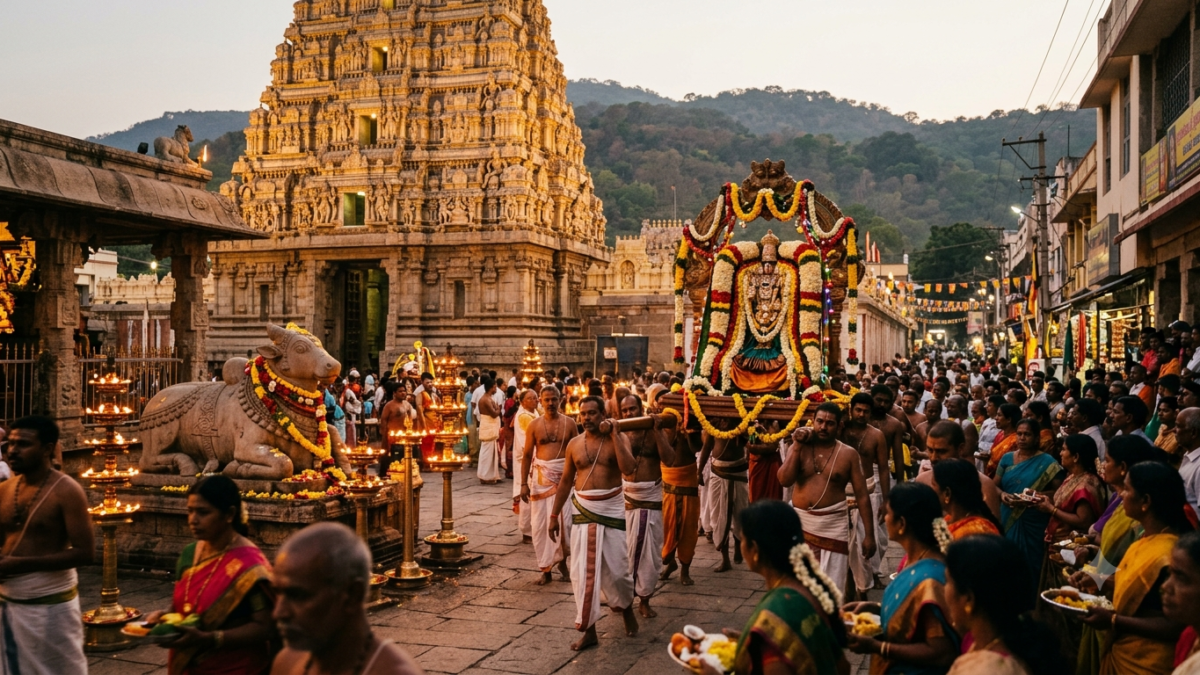
The Kapileswara Swamy Brahmotsavam is the biggest annual festival at the ancient Kapila Theertham temple in Tirupati. Each February, it turns this quiet Shiva shrine at the foot of the hills into a swirl of lamps, music, and processions. The festival falls in the Telugu month of Magha, so the dates land in February and peak on Maha Shivaratri.
Whether you want to witness the vahana sevas or simply understand what the festival means, this guide has you covered. It walks you through the schedule, the rituals, and everything a first-time pilgrim needs to know.
Independence notice: Tirupati Official is an independent guide for Tirupati city and its temples. We are not the official website of the temple. We are not affiliated with Tirumala Tirupati Devasthanams (TTD), and we do not accept bookings, donations, or payments. For official schedules, sevas, and tickets, always use the TTD portal linked below.
Quick Facts: Kapileswara Swamy Brahmotsavam
- Temple: Sri Kapileswara Swamy Temple, also called Kapila Theertham, Tirupati
- Deity: Lord Shiva, worshipped as Kapileswara
- Managed by: Tirumala Tirupati Devasthanams (TTD)
- Festival month: Magha Masam, which falls in February
- Peak day: Maha Shivaratri, with the grand Rathotsavam chariot procession
- Setting: A sacred waterfall and holy tank at the foot of the Seshachalam hills
- Distance: About 3 km from the Tirupati bus stand
When Is the Kapileswara Swamy Brahmotsavam?
The Kapileswara Swamy Brahmotsavam takes place once a year during Magha Masam, so it always falls in February. The festival runs for several days and culminates on Maha Shivaratri, the most sacred night for Shiva devotees. Because the Hindu calendar shifts against the Gregorian one, the exact dates move a little each year.
In its most recent celebration, Maha Shivaratri fell on 15 February 2026. The festival opened in the second week of February. It then closed with the Trisula Snanam ritual on 17 February.
For the coming year, expect the festival again around mid-February, since it stays tied to the Shivaratri date. Always confirm the exact days on the official TTD source before you travel. The temple releases its ritual calendar close to the festival, so early dates online can be guesses.
Kapileswara Swamy Brahmotsavam Vahana Seva Schedule
During the Kapileswara Swamy Brahmotsavam, priests carry the processional deity through the temple streets each evening. Every day features a different vahana, or divine mount, and each one carries its own meaning.
Devotees gather at dusk to watch the utsava murti move under decorated canopies. The daily order can vary slightly by year. Still, the festival follows a familiar rhythm from the flag hoisting to the final holy bath.
| Ceremony | What Happens | 2026 Date |
|---|---|---|
| Dhwajarohanam | Flag hoisting that opens the festival | Second week of Feb |
| Daily Vahana Sevas | Processions on Hamsa, Simha, Gaja, Nandi and Aswa mounts | Through mid-Feb |
| Rathotsavam | Grand chariot procession | 15 Feb (Maha Shivaratri) |
| Kalyanotsavam | Celestial wedding of the Lord | 16 Feb |
| Trisula Snanam | Sacred trident bath | 17 Feb |
| Dhwajavarohanam | Flag descent that closes the festival | 17 Feb |
TTD sets the exact daily vahana timings each year, so treat the mounts above as the pattern rather than a fixed calendar. Most processions begin in the evening, when the weather cools and the crowds swell. To be sure of a specific day, check the official schedule once the temple publishes it. You can plan your trip around the milestone days above, which stay consistent from year to year.
Dhwajarohanam and Ankurarpanam
The festival opens with Ankurarpanam, a seed-sowing ritual that seeks blessings for a smooth celebration. Priests then perform Dhwajarohanam, raising the temple flag on the Dhwajastambham to invite the gods. This flag hoisting formally marks the start of the Kapileswara Swamy Brahmotsavam. It draws a large morning gathering, so arrive early if you want to see it up close.
Rathotsavam and Maha Shivaratri
Rathotsavam is the emotional peak of the festival. The deity rides a massive wooden chariot that hundreds of devotees pull through the streets. In 2026 it fell on 15 February, the same day as Maha Shivaratri.
Pilgrims fast through the day and keep vigil through the night. The temple stays busy from dawn until well past midnight, so expect the heaviest crowds of the whole festival on this day.
Kalyanotsavam and Trisula Snanam
The day after Rathotsavam brings Kalyanotsavam, the symbolic wedding of Lord Kapileswara and his consort. The festival then closes with Trisula Snanam. In this rare ritual, priests bathe the sacred trident in the temple waters. Once they finish this bath, they lower the flag in the Dhwajavarohanam ceremony, and the Brahmotsavam ends for the year.
The Sacred Kapila Theertham and Its Waterfall
Kapila Theertham takes its name from Sage Kapila. Devotees believe he worshipped Shiva at this very spot long ago.
A natural waterfall tumbles down the rocks beside the temple. It feeds a Pushkarani, or holy tank, that holds water through the year. Devotees believe a dip in these waters washes away sins, so the theertham is as central to a visit as the shrine itself.
The waterfall is at its most dramatic during and just after the monsoon. In those months it roars down in full flow.
By late winter and summer it often runs dry, which is worth knowing if the falls are a big draw for you. Since the Brahmotsavam falls in February, the falls may be thin during the festival. The Pushkarani tank, though, still holds water for a holy dip.
Inside the complex you will also find a giant stone Nandi at the entrance. Several sub-shrines sit within the premises too, including those for Kamakshi, Vinayaka, Subrahmanya, Agastheeswara, and Sri Krishna. The temple drew strong patronage from the Vijayanagara kings between the 13th and 16th centuries, especially Krishnadevaraya. That long history shows in its Dravidian carvings and layered stonework.
Why the Kapileswara Swamy Brahmotsavam Feels Different
Tirupati is famous worldwide for Lord Venkateswara at Tirumala, so most pilgrims picture Vishnu when they think of the town. Kapila Theertham offers a rare Shaivite counterpoint at the base of the same hills. Here, Lord Shiva takes the spotlight, and the festival carries a distinctly Shivaratri flavour. That blend of a hill-shrine setting, a living waterfall, and a Shiva Brahmotsavam is hard to find elsewhere in the region.
The scale also stays human here. Unlike the enormous Tirumala crowds, this festival keeps a local, community feel, even on its busiest night. You can stand close to the processions and soak in the ritual without a days-long wait. For many devotees, that intimacy is exactly the draw.
Timing your trip helps too. Weekday processions tend to feel calmer than weekend ones, so a mid-week visit can reward you with easier movement. Photographers often favour the golden light of the early evening sevas, just before the main crowd builds.
Kapileswara Swamy Brahmotsavam Darshan Timings and Sevas
The temple generally opens from around 5:00 AM to 9:00 PM. Free Sarva Darshan runs through most of the day. Timings shift during the Brahmotsavam and on Maha Shivaratri, when special processions and heavy footfall change the flow. So if you visit during the festival, plan for longer queues and altered hours.
The temple serves free anna prasadam to pilgrims at the nearby Sri Hayagreeva Swamy temple on Thiru Mada Street. The dress code stays traditional and modest, as at any TTD shrine.
You can book a few sevas through official TTD channels, while priests perform others at the counter. Verify the current list and tariffs on the official portal rather than through any third party. For wider planning, our guide to darshan in Tirupati and Tirumala covers ticket types and timings in detail.
How to Reach for the Kapileswara Swamy Brahmotsavam
Kapila Theertham sits about 3 km from the Tirupati bus stand and railway station. Reaching it is easy once you are in the city. Local buses, autos, and cabs run to the temple throughout the day. If you travel for the Kapileswara Swamy Brahmotsavam, arrive early on procession days, because roads near the temple get congested by evening.
Tirupati connects well by rail to Chennai, Hyderabad, Bengaluru, and beyond. The nearest airport is Tirupati (Renigunta), roughly 15 km away.
Many pilgrims combine this visit with a Tirumala darshan, since both sit within the same holy region. Book your train or accommodation ahead during February, as the festival season fills the city quickly. You can track other TTD festivals and darshan updates through our TTD festivals and seva section.
Pilgrim Tips and Safety Notes
The rocks around the waterfall and tank can get slippery. So wear footwear with grip, and watch your step near the water. Maha Shivaratri draws enormous crowds, and the night vigil means long hours on your feet. Carry drinking water, any regular medication, and a small torch for the evening processions.
Elderly pilgrims, pregnant women, and anyone with a health condition should pace themselves. Avoid the densest crush around Rathotsavam if you tire easily. If you plan to fast for Shivaratri, listen to your body, and consult a doctor first if you have any medical concern. Keep valuables secure too, since pickpocketing rises in festival crowds anywhere.
Beware of unofficial websites or agents that promise “guaranteed” festival darshan or seva slots for a fee. Genuine bookings happen only through TTD’s official portal. No private page can jump the queue for you, whatever it claims.
Parking near the temple is limited on festival days, so consider an auto or a short walk from a farther point. A little patience with the traffic goes a long way once the evening rush sets in.
Before You Go
The Kapileswara Swamy Brahmotsavam ranks among Tirupati’s most atmospheric temple festivals, and it rewards pilgrims who plan ahead. Aim to catch at least one evening vahana seva. Set aside time for the theertham and the sub-shrines beyond the main sanctum. Above all, confirm the current dates, timings, and seva details on the official TTD source before you set out, so your visit runs smoothly.
Frequently Asked Questions
When is the Kapileswara Swamy Brahmotsavam celebrated?
Devotees celebrate it every year in the Telugu month of Magha, which falls in February. The festival peaks on Maha Shivaratri and runs for several days around it. In 2026, Maha Shivaratri fell on 15 February.
Which temple hosts the festival?
The festival takes place at the Sri Kapileswara Swamy Temple, popularly known as Kapila Theertham, in Tirupati. It is a Shiva temple that TTD manages. The shrine sits at the foot of the Seshachalam hills beside a sacred waterfall.
What is the highlight of the Kapileswara Swamy Brahmotsavam?
The Rathotsavam, or grand chariot procession, is the main highlight, and it takes place on Maha Shivaratri. Devotees also value the Kalyanotsavam and the rare Trisula Snanam ritual that closes the festival. Each evening features a different vahana procession.
How do I reach the Kapila Theertham temple?
The temple sits about 3 km from the Tirupati bus stand and railway station. Local buses, autos, and cabs run there through the day. The nearest airport is Tirupati (Renigunta), around 15 km away.
Are the darshan timings different during the festival?
Yes, timings and queue arrangements change during the Brahmotsavam and on Maha Shivaratri. The temple normally opens around 5:00 AM and closes near 9:00 PM. Confirm festival-day timings on the official TTD source before visiting.
Can I book Kapileswara Swamy Brahmotsavam sevas online?
TTD may offer a few sevas through its official channels, while priests perform others at the temple counter. Availability and tariffs change often, so check the official TTD portal for the current list. Avoid any third-party site that claims to sell festival slots.
Is the waterfall flowing during the festival?
Not always, since the falls depend on the monsoon and often run thin by February. The Pushkarani tank still holds water for a holy dip year-round. Visit soon after the monsoon if seeing the full waterfall matters to you.
Tirupati Official is an independent guide. We are not affiliated with, endorsed by, or the official website of Tirumala Tirupati Devasthanams or the Sri Kapileswara Swamy Temple. For official information, sevas, and bookings, visit the TTD official website or the Andhra Pradesh TTD booking portal.