The ISRO Tirumala temple visit before the LVM3-M6 launch followed a ritual India’s space agency has kept for decades. On Monday, 22 December 2025, ISRO Chairman V. Narayanan climbed to the Sri Venkateswara Temple at Tirumala and offered prayers for the mission ahead. Reporters saw him carrying a small replica of the launch rocket in his hands.
Two days later, that rocket flew — and it made history. On 24 December 2025, the LVM3-M6 rocket lifted the heaviest satellite ever sent into orbit from Indian soil, and the flight also became ISRO’s 100th orbital launch. So this report explains what happened at the temple, how the mission finished, and why these visits keep happening.
Tirupati Official is an independent news site. We are not affiliated with, endorsed by, or the official website of the Tirumala Tirupati Devasthanams (TTD) or the Indian Space Research Organisation (ISRO). For darshan and temple services use the official TTD portal, and for mission details use the official ISRO website — both are linked below.
Quick Facts at a Glance
- Who: ISRO Chairman V. Narayanan, along with senior mission scientists.
- Where: Sri Venkateswara Temple, Tirumala, Andhra Pradesh.
- When: Monday, 22 December 2025, two days before liftoff.
- Mission: LVM3-M6, carrying the BlueBird Block-2 satellite for US firm AST SpaceMobile.
- Result: Successful launch on 24 December 2025 — ISRO’s 100th orbital mission.
What the ISRO Tirumala Temple Visit Involved
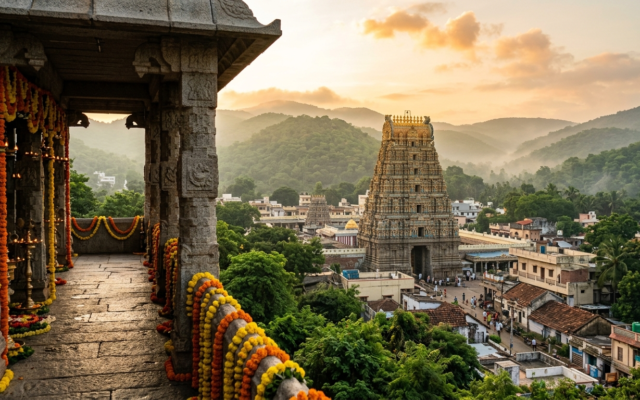
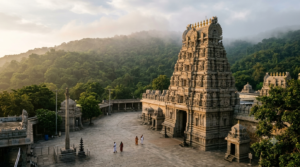
The ISRO Tirumala temple visit took place on Monday, 22 December 2025, when Chairman Narayanan prayed at the Sri Venkateswara shrine for the LVM3-M6 mission. Senior scientists and members of the launch team joined him. Together they took part in special rituals, as ISRO teams often do before a critical flight.
Narayanan carried a miniature model of the rocket while he offered prayers. This small gesture is a familiar sight before Indian launches, because scientists have done it for years. He also spoke briefly to reporters at Tirupati.
“On 24 December, we are targeting the launch of BlueBird-2 using our Bahubali rocket, the M6 rocket,” Narayanan told PTI. He added that the mission would lift the heaviest satellite ever launched from Indian soil. The satellite, he said, was built for 4G and 5G communication.
Did the LVM3-M6 Launch Succeed After the Blessings?
Yes. ISRO launched LVM3-M6 successfully on Wednesday, 24 December 2025, at 8:55 AM IST from the Second Launch Pad at the Satish Dhawan Space Centre in Sriharikota. The 43.5-metre rocket flew with two solid strap-on boosters.
About 15 minutes after liftoff, the satellite separated and reached its planned low Earth orbit. Mission controllers had held the countdown for roughly 90 seconds before launch. They did this as a precaution, since a possible space-debris conjunction appeared along the flight path. After the short hold, the rocket lifted off cleanly and performed normally.
Narayanan hailed the flight soon after. He called BlueBird Block-2 the heaviest satellite ever lifted from Indian soil using an Indian launcher, and he noted that it entered orbit with precision. Prime Minister Narendra Modi and the Vice President both congratulated the ISRO team the same day.
This flight carried extra weight in ISRO’s record books. It was the agency’s 100th orbital launch since the first SLV-3 mission, so the milestone made a strong headline of its own.
What the BlueBird Block-2 Satellite Does
BlueBird Block-2, also called BlueBird 6, is a communications satellite built by the US company AST SpaceMobile. It weighs about 6,100 kg, which made it the heaviest payload the LVM3 has ever carried. When it reached orbit, it became the largest commercial communications satellite in low Earth orbit.
The satellite is huge for a reason. It carries a phased-array antenna of nearly 2,400 square feet, so it can beam a strong signal straight to ordinary phones. Because of that design, it connects to standard, unmodified smartphones without any special hardware.
AST SpaceMobile says the satellite supports 4G and 5G voice, messaging, streaming, and data, with peak speeds up to 120 Mbps direct to a device. That is roughly ten times the capacity of the company’s earlier Block-1 satellites. India flew the mission under a commercial contract between NewSpace India Limited (NSIL), ISRO’s commercial arm, and AST SpaceMobile.
Why the ISRO Tirumala Temple Visit Happens Before Major Launches
The ISRO Tirumala temple visit is not an official government ceremony. Instead, it is a personal and cultural custom that ISRO chairmen and scientists have followed for decades. Many of them pray at Tirumala, and sometimes at other temples too, before a difficult mission.
The habit shows up again and again in India’s space story. ISRO teams offered prayers before Chandrayaan-2 and Chandrayaan-3, and before earlier lunar and Mars missions as well. Scientists have often carried a miniature model of the satellite or rocket to the shrine as a symbolic offering.
Before Chandrayaan-3 in 2023, for example, the then-chairman took a small replica of the lander to Tirumala. The same scene repeated here with the LVM3-M6 model. Because the images travel widely, each visit renews public interest in the mission that follows.
Faith and Engineering Side by Side
These visits sit alongside rigorous engineering, not in place of it. A launch still depends on years of testing, careful checks, and hard data. Yet the ritual matters to many team members, because it can steady nerves and build a sense of shared purpose before a high-stakes day.
National and regional media cover the visits closely, since they capture a striking mix of faith and science. For a scientific organisation, the moment also connects the mission to public sentiment across the country. That blend is why the tradition draws so much attention each time.
Seen this way, the ISRO Tirumala temple visit is really two events at once. It is a private act of faith for the people involved, and it is a public moment that the whole country watches. Because the two sides sit together so neatly, the story spreads well beyond the space community.
A Record-Setting Mission by the Numbers
The numbers explain why this flight stood out. The most important figure is the payload weight, because it set a national record for an Indian launcher.
| Detail | Figure |
|---|---|
| Launch date | 24 December 2025, 8:55 AM IST |
| Milestone | ISRO’s 100th orbital launch |
| Satellite weight | About 6,100 kg (heaviest from Indian soil) |
| Rocket flight | 6th operational LVM3 flight; 3rd commercial one |
| Antenna size | Nearly 2,400 square feet |
| Peak speed | Up to 120 Mbps direct to a phone |
To put it plainly, this single launch broke a payload record, marked a century of ISRO orbital missions, and carried the largest commercial communications satellite yet flown to low Earth orbit.
What the Mission Means for India’s Space Business
Beyond the ritual, the launch mattered for commerce. NewSpace India Limited flew BlueBird Block-2 for a foreign customer, so the mission showed that India can win big international contracts. That kind of heavy commercial payload was once handled mostly by American and European rockets.
Government leaders framed it in exactly those terms. Prime Minister Modi called the flight a stride for a self-reliant India in space, while officials pointed to the country’s growing role in the global launch market. Because AST SpaceMobile plans a whole fleet of these satellites, more such launches from Sriharikota may follow.
The timing helped as well. A record flight just before the year’s end gave ISRO strong momentum into 2026. It also reassured foreign clients that the LVM3 can carry their heaviest satellites on schedule.
What Happened After the Launch
Early coverage of this event looked ahead to ISRO’s next flight, the PSLV-C62 mission carrying the EOS-N1 satellite. Some reports linked it to a launch on 31 December 2025. That date was wrong, so it is worth correcting here.
ISRO actually launched PSLV-C62/EOS-N1 on 12 January 2026, as the first Indian mission of the new year. Sadly, the flight failed. A deviation in the third stage meant the rocket did not reach orbit, and the EOS-N1 satellite, also called Anvesha, was lost.
The Tirumala tradition still continued into 2026. Before the PSLV-C62 attempt, Narayanan again visited the Tirupati temple to offer prayers. The contrast is telling: the ritual expresses hope, while success or failure rests entirely on the engineering.
Planning Your Own Tirumala Temple Visit
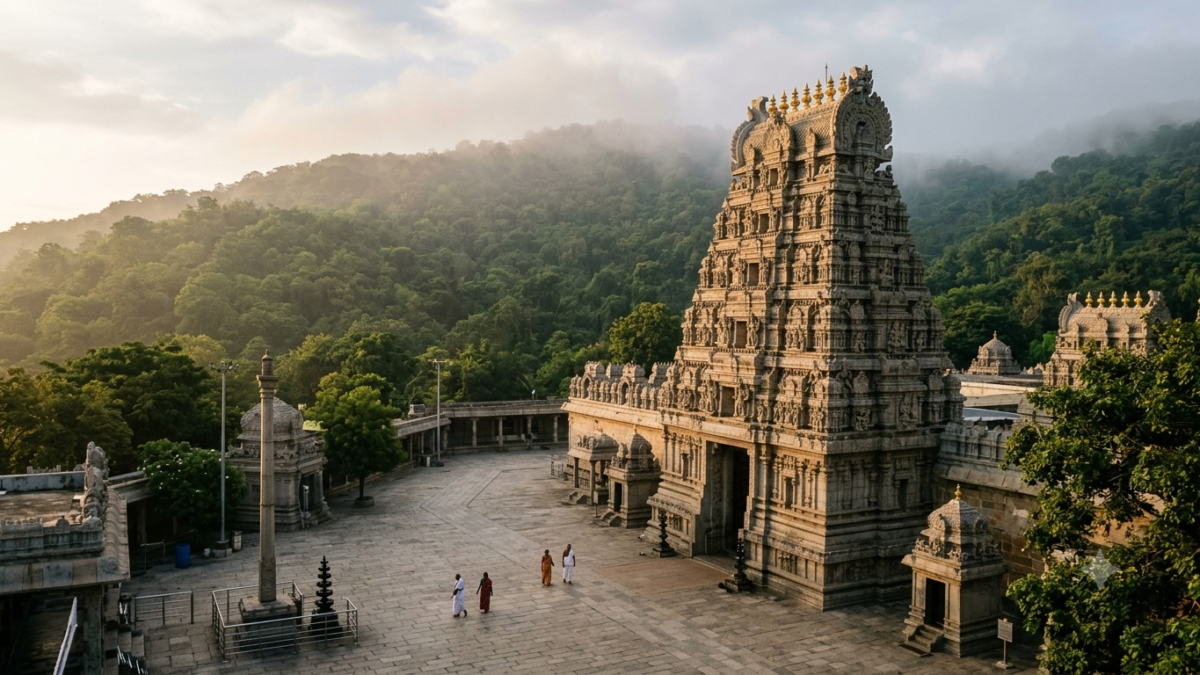
Many readers ask whether they can visit the same shrine that ISRO’s team did. The answer is yes, because the Sri Venkateswara Temple at Tirumala welcomes pilgrims every day. It sits on a hill above Tirupati in Andhra Pradesh.
Book darshan and any accommodation only through the official TTD portal, since fake booking sites are common for Tirumala. Prices and slot rules change often, so confirm current details on the official site before you travel. Our Tirumala temple timing guide and our note on same-day Srivani darshan can help you plan the trip.
One practical caution helps if you plan to walk up. The footpaths at Alipiri and Srivari Mettu involve thousands of steps, so carry water and pace yourself. Elderly pilgrims, pregnant travellers, or anyone with a health condition should consider the bus route instead, and check with a doctor before a long climb.
If the ISRO Tirumala temple visit sparked your own interest in the shrine, plan ahead and travel light. Peak seasons and festival days draw huge crowds, so waiting times rise sharply. A weekday visit outside festival dates is usually calmer for a first trip.
The Bottom Line
The ISRO Tirumala temple visit and the launch together tell one story about modern India. Faith and cutting-edge science shared the same week, and both drew national attention. The mission itself delivered a record payload and a landmark 100th orbital flight for ISRO.
For readers, the takeaway is straightforward. The prayers reflect a long cultural custom, while the results come from engineering and testing. If you want to follow ISRO’s missions or visit Tirumala yourself, use the official sources linked here rather than unofficial portals.
Frequently Asked Questions
Was the ISRO Tirumala temple visit an official ISRO ceremony?
No. The ISRO Tirumala temple visit is a personal and cultural custom, not an official government event. Individual scientists and chairmen choose to pray before major launches, and ISRO does not run it as formal policy.
When did the ISRO Tirumala temple visit take place?
Chairman Narayanan offered prayers at Tirumala on Monday, 22 December 2025. That was two days before the LVM3-M6 launch on 24 December 2025.
How often do ISRO teams visit Tirumala before a launch?
Quite often, especially before major or high-risk missions. The custom has recurred for years, and it continued into 2026 when the chairman prayed at Tirumala again before the PSLV-C62 flight.
Did the LVM3-M6 mission succeed?
Yes. ISRO launched LVM3-M6 successfully on 24 December 2025 from Sriharikota. The rocket placed the BlueBird Block-2 satellite into its intended low Earth orbit about 15 minutes after liftoff.
What satellite did LVM3-M6 carry?
It carried BlueBird Block-2, also known as BlueBird 6, a communications satellite for the US company AST SpaceMobile. At around 6,100 kg, it was the heaviest satellite ever launched from Indian soil.
Why do ISRO scientists carry a miniature rocket to the temple?
Scientists carry a small model of the rocket or satellite as a symbolic offering. It is a gesture of hope for a safe and successful mission, and it has become a familiar part of the pre-launch tradition.
Is Tirupati Official the official TTD or ISRO website?
No. Tirupati Official is an independent news site and is not affiliated with TTD or ISRO. For temple bookings use the official TTD portal, and for mission information use the official ISRO website.
Where exactly did the ISRO Tirumala temple visit happen?
It happened at the Sri Venkateswara Temple on the Tirumala hills, above Tirupati in Andhra Pradesh. This is the same hill shrine that millions of pilgrims reach every year.
Can I visit the same temple that ISRO’s team visited?
Yes. The Sri Venkateswara Temple at Tirumala is open to pilgrims daily. Book darshan through the official TTD website, and read the mission details on the official ISRO site. You can also follow the science events hosted in Tirupati for more on the city’s research links.