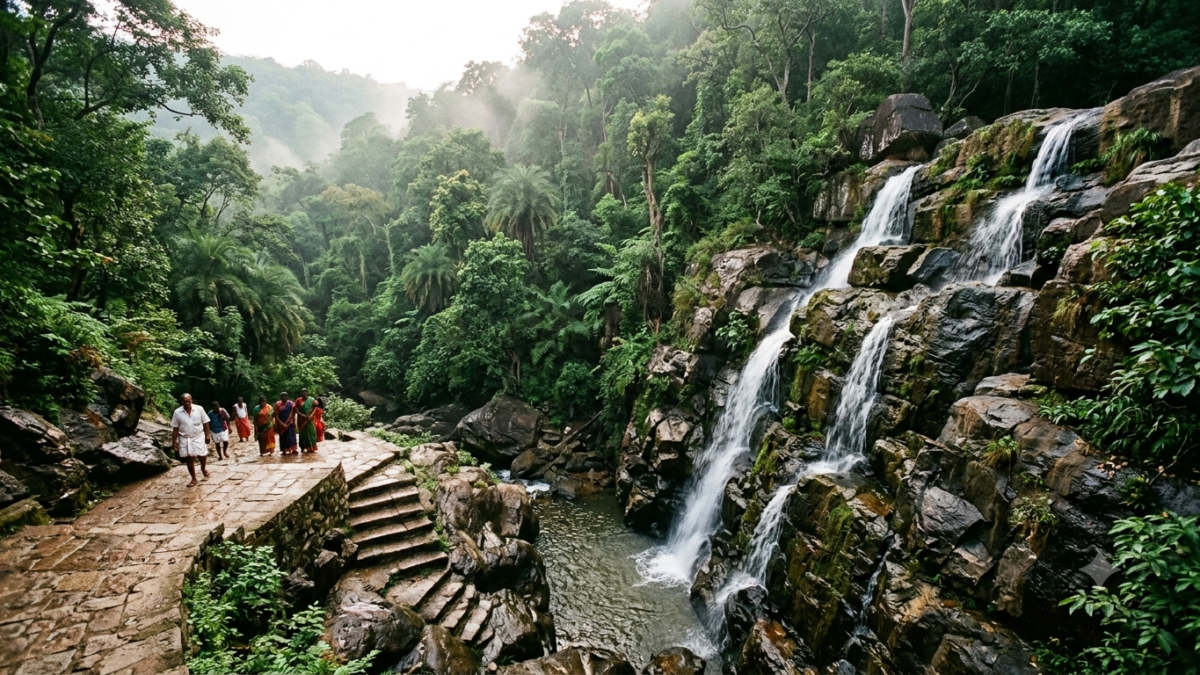
Akasaganga Teertham Tirumala is a perennial sacred waterfall tucked into the forested Seshachalam hills, a short ride from the Sri Venkateswara temple. Most online guides get one detail wrong, so let’s clear it up first. A few sites claim bathing here is banned, yet the Tirumala Tirupati Devasthanams (TTD) actually lists a holy dip at Akasa Ganga among the things pilgrims are encouraged to do. This guide gives you the real picture: timings, the free bus, the climb down, the best season, and the practical safety notes that thin listicles skip. 
Akasaganga Teertham Tirumala at a Glance
- What it is: a natural, year-round waterfall whose water is used for the daily bathing ritual of Lord Venkateswara.
- Where: Seshachalam hills, inside Sri Venkateswara National Park, roughly 3 km from the Tirumala bus stand.
- Entry fee: free — no TTD ticket is needed.
- Getting there: TTD’s free Srivari Dharma Ratham buses, APSRTC hill buses, or a taxi/jeep.
- Effort: around 100 steps down to the falls, so a moderate climb back up.
- Best season: during and just after the monsoon, when the water runs full.
Where Is Akasaganga Teertham Tirumala?
Akasaganga Teertham Tirumala sits in a wooded valley about 3 km from the Tirumala bus stand, within a few kilometres of the main temple. Distance figures vary across sources because the walk-in point and the falls themselves are slightly apart. The whole area lies inside Sri Venkateswara National Park, so you are surrounded by protected forest. The name itself tells a story. “Akasa” means sky and “Ganga” means the Ganges, so Akasaganga reads as the “Ganges from the heavens.” Devotees believe the stream descends from the lotus feet of Lord Venkateswara, a belief rooted in Vedic tradition rather than something that can be measured.
Why Akasaganga Teertham Tirumala Matters to Pilgrims
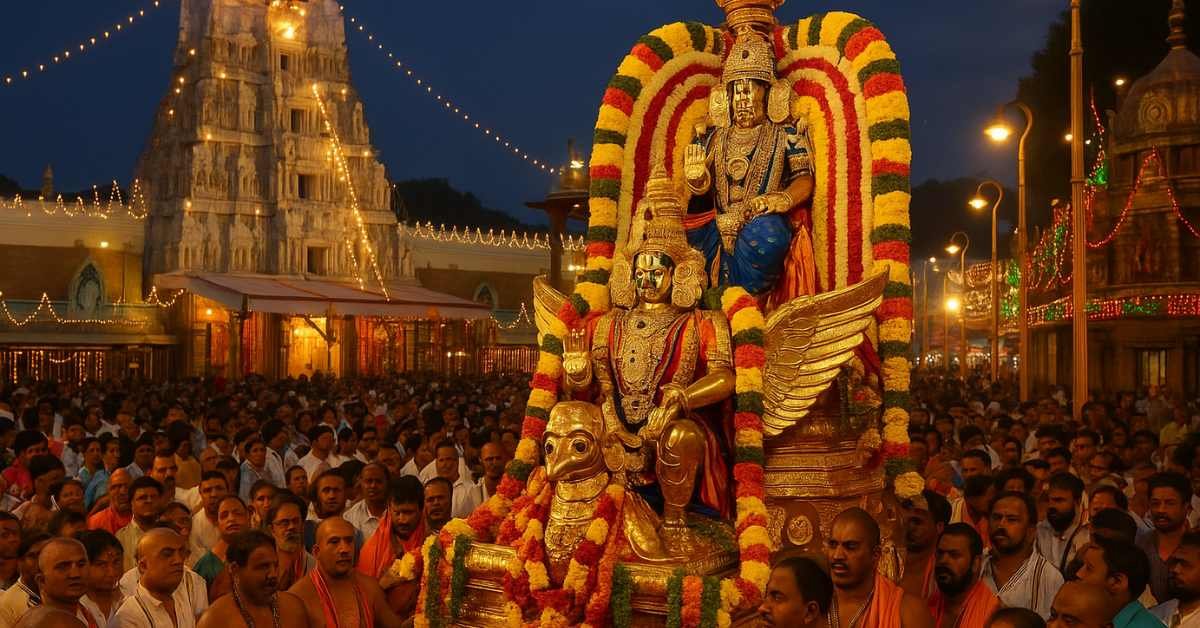
This is not just a scenic stop. Priests use the water drawn from here for the Lord’s thirumanjanam. That is the daily ceremonial bath of the deity inside the main temple. This single fact places Akasa Ganga at the heart of Tirumala’s rituals. For centuries, members of the Tirumala Nambi family carried the sacred water up to the shrine by hand each morning. TTD later laid pipelines to bring the water directly, so the daily haul is no longer needed. Still, the traditional carrying continues on special occasions, which keeps the old custom alive. Because of this ritual link, many devotees treat a visit here as part of a complete Tirumala pilgrimage. The waterfall is woven into the temple’s living tradition, not bolted on as a tourist attraction.
Is Bathing Allowed at Akasaganga Teertham Tirumala? (The Myth, Corrected)
Yes, bathing is allowed and even encouraged. TTD’s own list of pilgrim “do’s” specifically invites devotees to bathe in the Akasha Ganga and Papavinasanam theerthams. So the claim on a few travel pages that dipping is forbidden here is simply wrong. A stone platform channels the running water so devotees can take it in their hands and sprinkle it before a dip. The traditional practice is to offer the water three times, sprinkle it on your head, and then bathe. When the flow is strong after rain, a full dip is easy; in dry months you may only manage a symbolic sprinkle because the stream thins out. Bathing is a matter of faith, not obligation. A holy dip is believed to wash away wrongdoing and bring good fortune, yet TTD is clear that a theertham bath is traditional, not mandatory for darshan.
Akasaganga Teertham Tirumala Timings and Entry Fee
There is no entry fee and no ticket for Akasaganga Teertham Tirumala. It is an open forest site, so you will not find a fixed ticketed schedule the way you do inside the main temple. Plan your visit for daylight hours, because the area is not safe to wander after dusk. Some listings quote roughly 9 AM to 6 PM, but timings can shift with forest and safety conditions. Before you set out, confirm the current visiting hours at the TTD information desk in Tirumala or on the official TTD channels. That way you avoid arriving after the access point has closed for the day.
How to Reach Akasaganga Teertham Tirumala
Reaching Akasaganga Teertham Tirumala is easy once you are on the hill. You have three practical options, and the first one costs nothing.
1. Free TTD Dharma Ratham bus
TTD runs a free intra-hill bus service called Srivari Dharma Ratham, now using modern electric buses. These buses stop at peripheral sites such as Akasaganga, Silathoranam, and the Papavinasanam Dam. There is no ticket and no booking — you simply board at a marked stop. Because it is low-floor and wheelchair-friendly, it suits elderly pilgrims well.
2. APSRTC hill bus
APSRTC also runs a paid “travel as you like” bus from the Tirumala bus stand toward Papavinasanam. It passes Akasa Ganga on the way. Fares are small but do change, so check the current rate at the bus stand rather than trusting an old figure online.
3. Taxi, jeep, or auto
Private taxis, shared jeeps, and autos wait near the bus stand and cover the peripheral sites in one loop. This is the quickest choice if you are short on time or travelling with family. It costs more than the buses, though.
The Climb: What to Expect on the Ground
Here is the detail most guides leave out. The waterfall sits below the road, so you descend roughly 100 steps to reach the water and then climb the same steps back up. It is a moderate effort for a fit adult, but the return climb is where people feel it. The steps can be slippery when wet, especially in the monsoon when the flow is strongest. Wear footwear with grip and take the descent slowly. Small shops near the top sell snacks, water, and trinkets, so you can rest before heading back.
Health and Safety Note
Elderly pilgrims, pregnant visitors, and anyone with heart or knee trouble should weigh the climb honestly before going down. Carry drinking water, since the return climb is tiring in the heat. If you are fasting for darshan, do not attempt the steps on an empty stomach in strong sun, and rest if you feel dizzy. When in doubt about a medical condition, check with a doctor before a strenuous climb. The waters carry deep spiritual merit for devotees, yet they never replace medical care.
Best Time to Visit Akasaganga Teertham Tirumala
The best time to visit Akasaganga Teertham Tirumala is during and just after the monsoon, roughly July to September and into October. The falls run wide and strong then, and the forest around turns lush and green. This is when the site looks its most spectacular. In peak summer the flow drops sharply and can shrink to a trickle, so a full bath may not be possible. Winter is pleasant and comfortable for the walk, with cooler air on the hill. Whichever season you choose, mornings are calmer and less crowded than afternoons.
The Legend Behind Akasa Ganga
The story of Akasa Ganga is one of Tirumala’s most loved. Sriman Tirumala Nambi, a devoted servant of the Lord, used to fetch water for the deity’s daily bath from a distant spot. One day the Lord appeared as a hunter and asked him for water to drink. Nambi refused, insisting the water served only God. The hunter then pierced the pot with an arrow, shot at the hillside, and pure water gushed out close by. Nambi realised the hunter was the Lord himself, creating this spring to ease his devotee’s burden. Ever since, water from Akasa Ganga has served the temple. Treat this as sacred tradition, told with devotion, rather than recorded history.
Temples and Theerthams Near Akasaganga Teertham Tirumala
Akasa Ganga is the most accessible of Tirumala’s nine traditional theerthams, so it pairs naturally with a wider circuit. Right beside the falls stands a small temple to Anjana Devi and Bala Anjaneya Swami, which many devotees visit in the same stop. On the same side of the hill you can add Papavinasanam Dam, the Gogarbham Dam, and the Japali Anjaneya (Venugopala Swamy) temple. Silathoranam, the natural rock arch, is another easy add-on reachable by the free bus.
The Nine Theerthams of Tirumala
If you have time for more than a quick dip, here is how the main sacred water bodies compare for planning.
| Theertham | Access | Good to know |
|---|---|---|
| Aakasa Ganga | Easy, ~100 steps | Most visited; ritual water source |
| Papavinasanam | Easy, by road | Dam outflow; “destroyer of sins” |
| Chakra | Moderate | Quieter; linked to Chakrasnanam |
| Gogarbha | Moderate trek | Prayers for children |
| Japali | Short walk | Peaceful; Anjaneya shrine nearby |
| Tumbhuru | ~1.5 km trek | Most scenic; post-monsoon only |
Most pilgrims do not cover all nine in one trip. A half-day easily fits Akasa Ganga alone, while a full day adds Papavinasanam and Chakra along the free bus route. Chakra theertham draws special crowds on the Chakrasnanam day of the annual Tirumala Brahmotsavam.
Insider Tips Most Guides Miss
- Go early. Morning light is gentle and the steps are less crowded, so the climb back feels easier.
- Carry a small towel and a change of clothes if you plan a dip, because changing space is basic.
- Keep valuables minimal. There are no lockers at the falls, so leave extra cash and jewellery at your room.
- Combine sites in one loop. Ride the free bus to Papavinasanam and hop off at Akasa Ganga to save time.
- Respect the forest. This is a national park, so carry your litter back and avoid plastic near the water.
Before You Go
Akasa Ganga rewards the pilgrim who plans a little. Aim for a monsoon or post-monsoon morning, take the free Dharma Ratham bus, and pace the 100-step climb. Treat the holy dip as an act of faith, keep the safety notes in mind for elderly travellers, and pair the falls with Papavinasanam for a fuller day. Always confirm live timings and any temporary closure on the official TTD sources before you set out. For official information, darshan, and seva bookings, visit the TTD portal at tirumala.org and the booking site ttdevasthanams.ap.gov.in. For the latest hill updates and advisories, see news.tirumala.org.
Frequently Asked Questions
Is there an entry fee for Akasaganga Teertham?
No, entry is free and no TTD ticket is required. It is an open forest site managed as part of the Tirumala hills, so you only need to cover your transport to reach it.
Can you take a bath at Akasa Ganga?
Yes. TTD encourages a holy dip here, and a stone platform channels the water for devotees. When the flow is low in summer, many people take only a symbolic sprinkle instead of a full bath.
How many steps are there at Akasaganga Teertham Tirumala?
There are around 100 steps down to the waterfall, and you climb the same steps back up. The descent is easy, but the return climb is tiring for elderly or unfit visitors, so pace yourself.
How do I reach Akasa Ganga from the Tirumala bus stand?
The simplest way is the free TTD Dharma Ratham bus, which stops at the Akasaganga access point. You can also take a paid APSRTC hill bus toward Papavinasanam or hire a taxi or jeep.
What is the best time to visit?
Visit during or just after the monsoon, roughly July to October, when the waterfall is full. Early mornings are calmer and cooler, which makes the climb more comfortable.
Is Akasaganga water really used in the temple?
Yes. Water from Akasa Ganga is traditionally used for the daily ceremonial bath of Lord Venkateswara. Pipelines now carry it directly, while the old hand-carried tradition continues on special days.
Is the visit suitable for elderly pilgrims?
It can be, with care. The free low-floor bus reaches the access point, but the 100-step descent needs a fit body and steady footing. Anyone with heart or knee issues should consider staying at the top viewpoint instead.